


HiAstro Insights
Dussehra 2026: Date, Shubh Muhurat, and the Meaning Behind Ravana Dahan
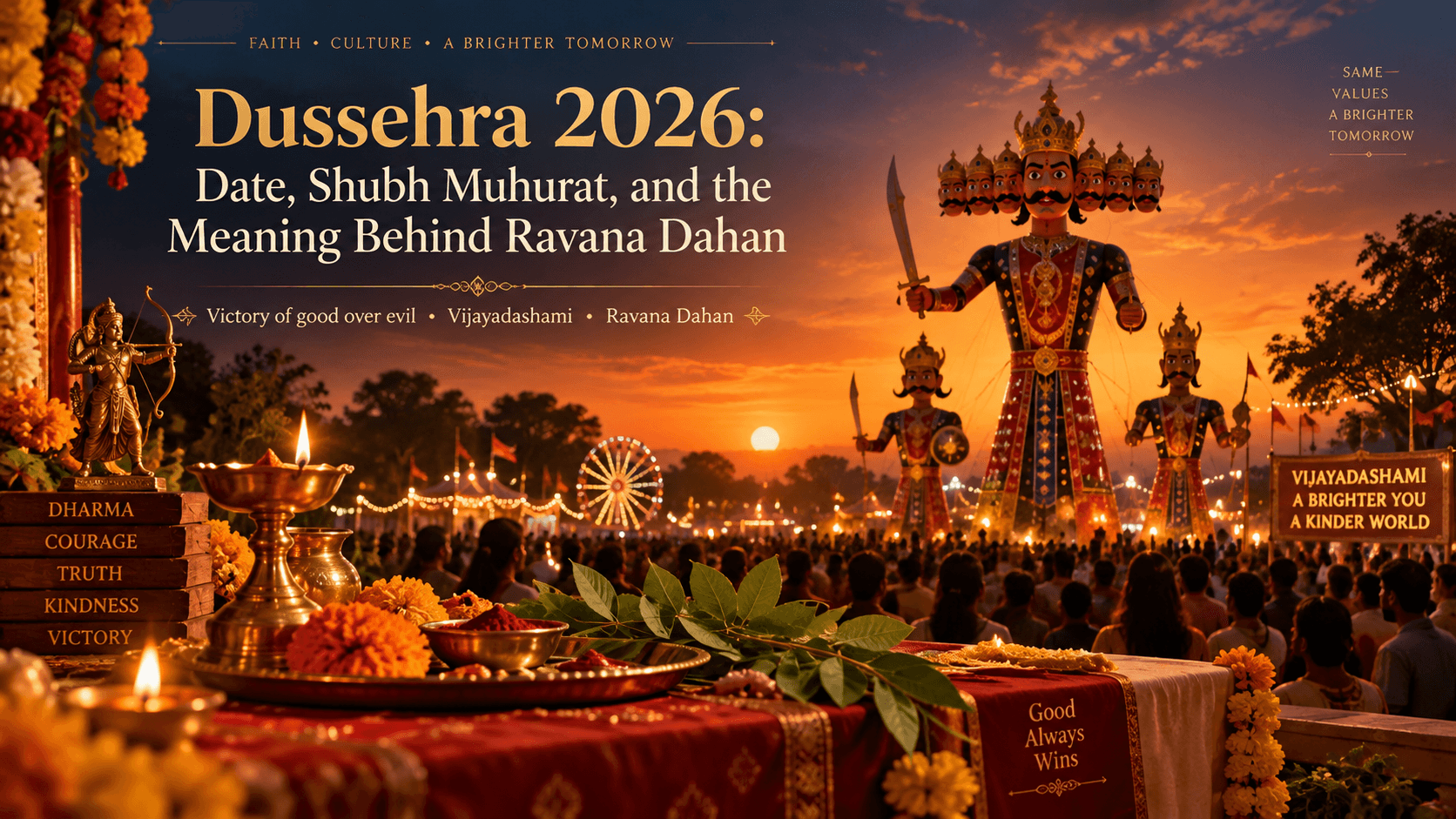
One can experience a certain ambience during Dussehra: a gathering of people anticipating the moment, some light shining brightly at the base of the towering effigy, and then the sound of the flame bursting into life as the fire rises higher. For children, this is a fun spectacle, while older generations view it as a tale that has been shared many times over. An important part of the day would also be an earlier, quieter ceremony that usually happens in the afternoon: an afternoon puja that marks the end of Navratri festivities.
Dussehra 2026 (Vijayadashami) is going to be held on Tuesday, 20th of October. The Delhi Vijay Muhurat would be between 1:59 PM and 2:45 PM. Ravana’s Dahan is expected to take place after sunset. In this article, we shall describe the timing information and the background of the festival along with the significance of setting Ravana's effigy.
Dussehra 2026 Date and Shubh Muhurat
These are approximate New Delhi timings for 20 October 2026:
Dashami tithi begins: about 12:50 PM on 20 October
Aparahna puja window: about 1:14 PM to 3:30 PM
Vijay Muhurat: about 1:59 PM to 2:45 PM
Ravana Dahan: after sunset, during Pradosh Kaal, usually around 6:30 PM to 8:30 PM, though local committees set the exact time
Dashami tithi continues until about 2:11 PM on 21 October, which is why Bengal and Nepal, following the sunrise tithi, observe Bijoya Dashami on 21 October. Timings vary by city, so confirm them in a local Panchang.
Read more https://www.hiastro.in/blog/durga-visarjan-2026-rules-rituals-and-why-we-immerse-the-idol
What Is Dussehra, and Why Is It Celebrated?
Dussehra, also called Vijayadashami, is the tenth day that follows the nine nights of Navratri, and it celebrates the victory of good over evil. Two stories explain it:
Rama and Ravana. In North and Central India, it marks the day Lord Rama defeated Ravana, the ten-headed king of Lanka who had abducted Sita.
Durga and Mahishasura. In Bengal, the east, and parts of the south, it commemorates Goddess Durga's victory over the buffalo demon Mahishasura, and it ends Durga Puja.
The two stories sit together comfortably. Both end with the restoration of dharma, and both are celebrated on the same day.
What Is the Meaning Behind Ravana Dahan?
The Ravana Dahan, or burning of Ravana effigy, usually along with the effigies of his brother Kumbhakaran and his son Meghnath, is the primary ritual of the festival. It is performed during night time to signify that good has triumphed over evil.
People interpret it as a lesson at a personal level too. The ten heads of Ravana can be understood as the ten horrible traits of life, like ego, anger, greed and desire, and the burning of his effigy serves as a reminder to give them up. This is a metaphorical interpretation rather than a practical recommendation but many families see it as an opportunity for introspection during the festival.
Dussehra Puja Vidhi: Shami, Aparajita and Shastra Puja
The main puja is traditionally done in the afternoon, within the Aparahna window and ideally during the Vijay Muhurat:
Shami Puja: The shami tree is worshipped, recalling the Mahabharata account of the Pandavas storing their weapons in one. Many people exchange shami leaves as a token of goodwill.
Aparajita Puja: The undefeated form of Goddess Durga is worshipped for courage, confidence and success over obstacles.
Shastra Puja: Tools, books, vehicles and instruments of livelihood are cleaned, honoured and offered flowers.
In Maharashtra and parts of Central India, people also exchange apta leaves as symbolic gold. Customs vary by region and family.
Why Is Dussehra Considered Auspicious for New Beginnings?
Many traditions treat Vijayadashami as a particularly favourable day to begin something new, whether a business, a course of study, a purchase or a creative project, without needing a separate muhurat. Whether it suits your own plans also depends on your personal chart, which is worth checking for any major decision.
Celebrating Dussehra Abroad
Dussehra celebrations for diaspora families may look a bit different than traditional celebrations back home. Please note that the muhurat timings mentioned above are based on Indian time. Therefore, it's advisable to refer to a local Panchang for the timings in your locality. It's important to understand that many community events may take place on the nearest weekend, thus sometimes making a celebratory event organized on different days from October 20.
A Balanced Note on Ravana Dahan
Similar to several other festivals, Dussehra is also adapting to the demands of time. As effigy burning ceremonies include a lot of firecrackers and crowds, it is critical to maintain a safe distance from the area of the ceremony, and be vigilant to children. Eco-friendly effigies are used in some communities due to the air pollution concerns. Also, it's interesting to know that in some locations such as Mandsaur in Madhya Pradesh and Bisrakh in Uttar Pradesh people don't participate in the process of burning Ravana as they treat him as a learned person and devote themselves to Shiva.
Make Dussehra Personal
If you're planning a new beginning on Vijayadashami, or would like to know how this day aligns with your own planetary period, generate your free Kundli or speak with an astrologer on HiAstro for personal guidance before Dussehra 2026.
Frequently Asked Questions
1. When is Dussehra 2026?
Dussehra (Vijayadashami) 2026 is on Tuesday, 20 October. Bengal and Nepal observe Bijoya Dashami on 21 October.
2. What is the Vijay Muhurat on Dussehra 2026?
In New Delhi it is about 1:59 PM to 2:45 PM on 20 October, within the Aparahna window of about 1:14 PM to 3:30 PM. Timings vary by city.
3. What time is Ravana Dahan on Dussehra 2026?
Ravana Dahan is traditionally held after sunset during Pradosh Kaal, often between 6:30 PM and 8:30 PM, though local committees set the exact time.
4. Why is Ravana burnt on Dussehra?
It symbolises the victory of good over evil, recalling Rama's defeat of Ravana, and many also see it as letting go of one's own negative traits.
5. What is Shami Puja on Dussehra?
Shami Puja is the worship of the shami tree, recalling the Pandavas' weapons stored in one, and is done in the afternoon muhurat.
6. Is Dussehra a good day to start something new?
Many traditions consider it very auspicious for beginnings, though a personal chart reading can help with major decisions.
7. Is Dussehra on 20 or 21 October?
Most North Indian calendars place it on 20 October, since Dashami prevails in the afternoon. Bengal and Nepal observe it on 21 October.
Read more https://www.hiastro.in/blog/navratri-2026-dos-and-donts-what-to-do-and-avoid-during-the-nine-days