


HiAstro Insights
Navratri 2026 Dos and Don'ts: What to Do and Avoid During the Nine Days
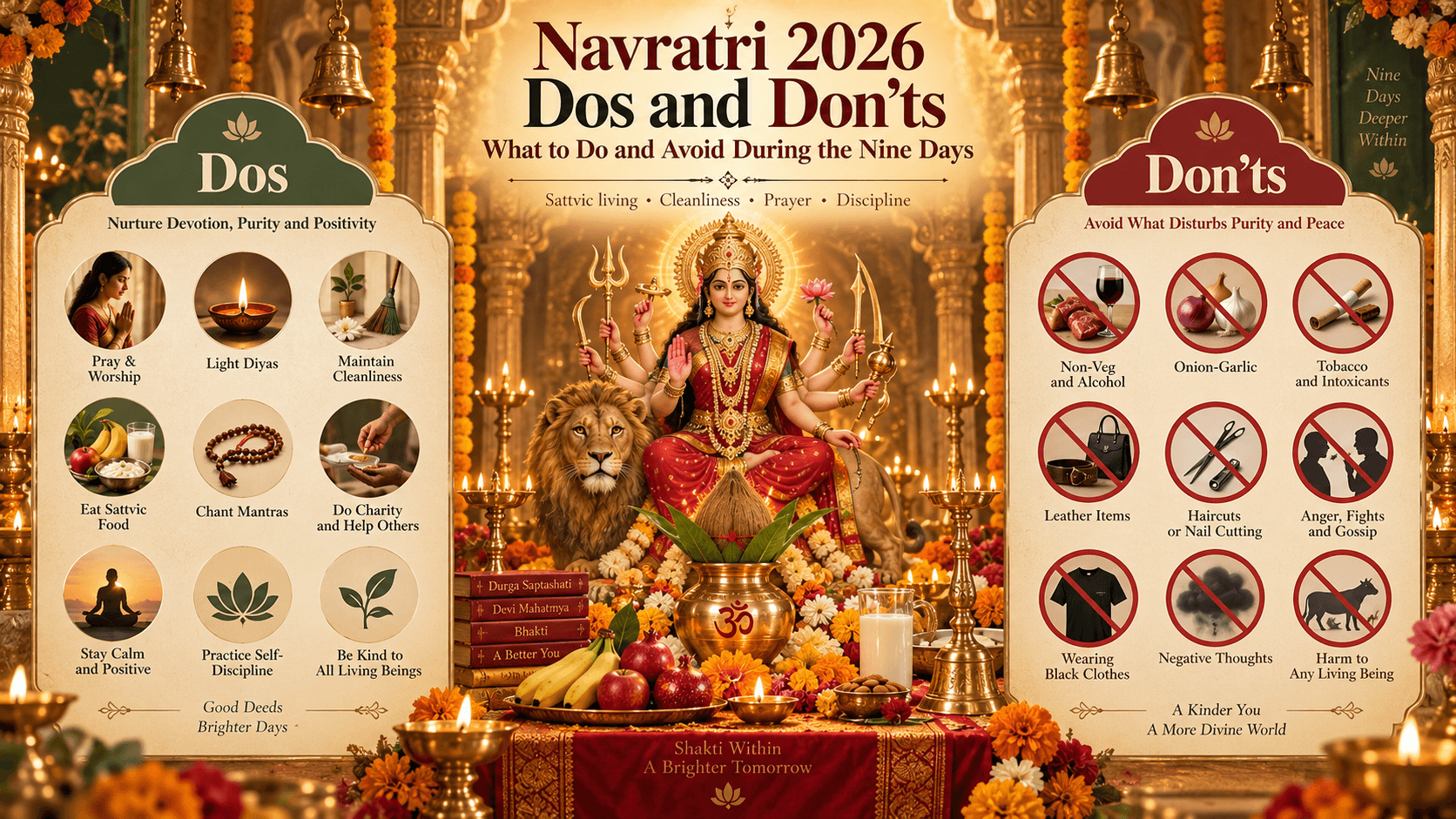
Around a few days ahead of Navratri, the queries start arriving. Often it is someone in the midst of a haircut or making a grocery list. They ask, " Can we still do this? Is this permitted? Every family has its own set of rules to follow, and the internet rarely helps, as long lists of prohibitions can make this joyful occasion feel like an exam.
The rules for observing the festival of Navratri focus on a sattvic diet, self-discipline, cleanliness, and propriety. Most families would refrain from eating non-vegetarian food, drinking alcohol, eating onions and garlic, wearing leather, or cutting their hair or nails. In Shardiya Navratri 2026, the dates for celebrating the festival are from 11 October to 19 October, with Dussehra on 20 October.
What to Do During Navratri
Wake early and keep the home clean: A morning bath, a tidy puja space, and fresh flowers set the tone for the day. Many households also clean their homes before Ghatasthapana on 11 October.
Light a diya in the morning and evening: If an Akhand Jyot (continuous lamp) is lit on the first day, tradition holds that it should stay lit through all nine days, so a family member should keep an eye on it. If a continuous flame isn't practical, lighting a fresh diya each morning and evening is widely accepted.
Eat sattvic food: Simple, freshly cooked vegetarian meals are the norm, with sendha namak (rock salt) in place of regular salt for those fasting. Fruits, milk, and light dishes are popular choices.
Chant or read daily: The day's mantra, the Durga Chalisa, or a few verses of the Durga Saptashati are common choices. Even five quiet minutes count.
Give and serve: Feeding the needy, donating clothes or food, and Kanya Pujan on Ashtami or Navami are considered especially meaningful. Many families also prepare small prasad for neighbours.
Wear the day's colour if it appeals: Colour-wearing is a tradition, not a requirement.
Practise restraint in speech and mood: Patience with family, respect for elders, and avoiding anger are considered part of the observance, as much as any ritual.
What to Avoid During Navratri
Non-vegetarian food, eggs and alcohol: This is the most universal rule, followed even by households that observe little else.
Onion and garlic: Traditionally regarded as rajasic and tamasic foods that dull the mind and stir restlessness, they are left out of Navratri cooking. Some households also avoid mushrooms.
Tobacco and other intoxicants: Part of the same spirit of purity during the nine days.
Haircuts, shaving and nail-cutting: Many families avoid grooming with sharp instruments, linking it to vanity rather than the austerity of the festival. Plenty of people simply groom before Navratri begins on 11 October.
Leather: Belts, shoes, and wallets are commonly avoided, as leather comes from animals. Substituting fabric or synthetic alternatives is a simple workaround.
Anger, arguments and gossip: Harsh speech undermines the purpose of the nine days, according to tradition.
Sleeping through the day: Often discouraged for those fasting, though this clearly doesn't apply to the unwell, elderly, pregnant, or anyone who needs rest.
Black clothing: Some households avoid it during Navratri, while others don't treat it as a restriction. If it matters in your family, follow that custom.
Many devout households also observe restraint in physical relationships during the nine days, in keeping with the festival's emphasis on discipline.
Read more https://www.hiastro.in/blog/navratri-mantras-one-powerful-mantra-for-each-of-the-nine-days
What Navratri Doesn't Restrict
Pitru Paksha is unlike Navratri, which is deemed a suitable time for fresh starts. There are no limitations on travel, work, shopping for necessities or social interactions during Navratri, which is also why many families choose this time for shopping or initiating any activities. However, for significant actions like weddings or bigger purchases, it is better to check for a personalized muhurat.
Following Navratri Rules While Working or Living Abroad
For diaspora families and working professionals, strict observance can be hard. A few practical adjustments are widely considered acceptable:
- Wear non-leather shoes and belts on days with office commitments.
- Groom before Navratri begins, and trim only if it is truly necessary for work.
- Prepare simple vrat meals in advance, using substitutes like buckwheat flour and tapioca pearls if local shops lack Indian ingredients.
- Keep prayer short and consistent: a diya, a mantra, and a few quiet minutes.
A Balanced Note on Rules and Real Life
The traditions associated with Navratri have evolved through seasons, community activities, and individual discipline and vary between regions, families, and communities. Having respect and adherence to customs isn’t just a matter of the number of customs that one can follow perfectly. The best course of action for people suffering from health, being pregnant, old, or taking their medicine is to give preference to health while observing under the circumstances. One of the things that one undertakes by accident can’t be spoiled by genuine observance and one should realize that a calm and kind attitude toward the celebration is much more important than rigid observance of the traditions.
Make the Nine Nights Personal
General rules only go so far, since the right level of observance depends on a person's health, family tradition, and the stage of life they're in. Generate your free Kundli to see your planetary placements, or speak with an astrologer on HiAstro for guidance on how to approach this Navratri in a way that suits you.
Read more https://www.hiastro.in/blog/navratri-fasting-recipes-easy-vrat-ka-khana-for-all-9-days
Frequently Asked Questions
1. Is it permissible to cut nails or hair during Navratri?
Some families refrain from cutting nails or hair for nine days. However, if hair or nails require grooming for health or work reasons, one should do it prior to the nine days or limit grooming to a minimum. It will depend upon the family customs too.
2. Is it allowed to use leather during Navratri?
Traditionally, leather items are avoided as much as possible. However, non-leather products can be easily used as alternatives during this period.
3. Is it permissible to eat garlic and onions during Navratri?
Most families refrain from using both these products during Navratri and observe a sattvic diet. Some families even avoid mushrooms during this time.
4. Is it permissible to wear black during Navratri?
Some households do not wear black clothes while others do not mind doing so at this time. Please do it according to your family traditions or, if possible, wear the colour for the day.
5. Is it permissible to travel or go to work during Navratri?
Yes. There are no restrictions on travel or work during the period of Navratri, and many individuals carry out their usual day-to-day processes while paying heed to the diet and prayers.
6. What should one do if one violates a Navratri rule by mistake?
A genuine mistake is forgivable. Priests recommend a prayer to God or an apology and continuing with one’s Ravan celebrations.
7. Are the rules valid if I do not fast?
The rules are usually applied across a household even after family members are not fasting. However, there may be variations in how strict the guidelines are.