


HiAstro Insights
Navratri Fasting Recipes: Easy Vrat ka Khana for All 9 Days
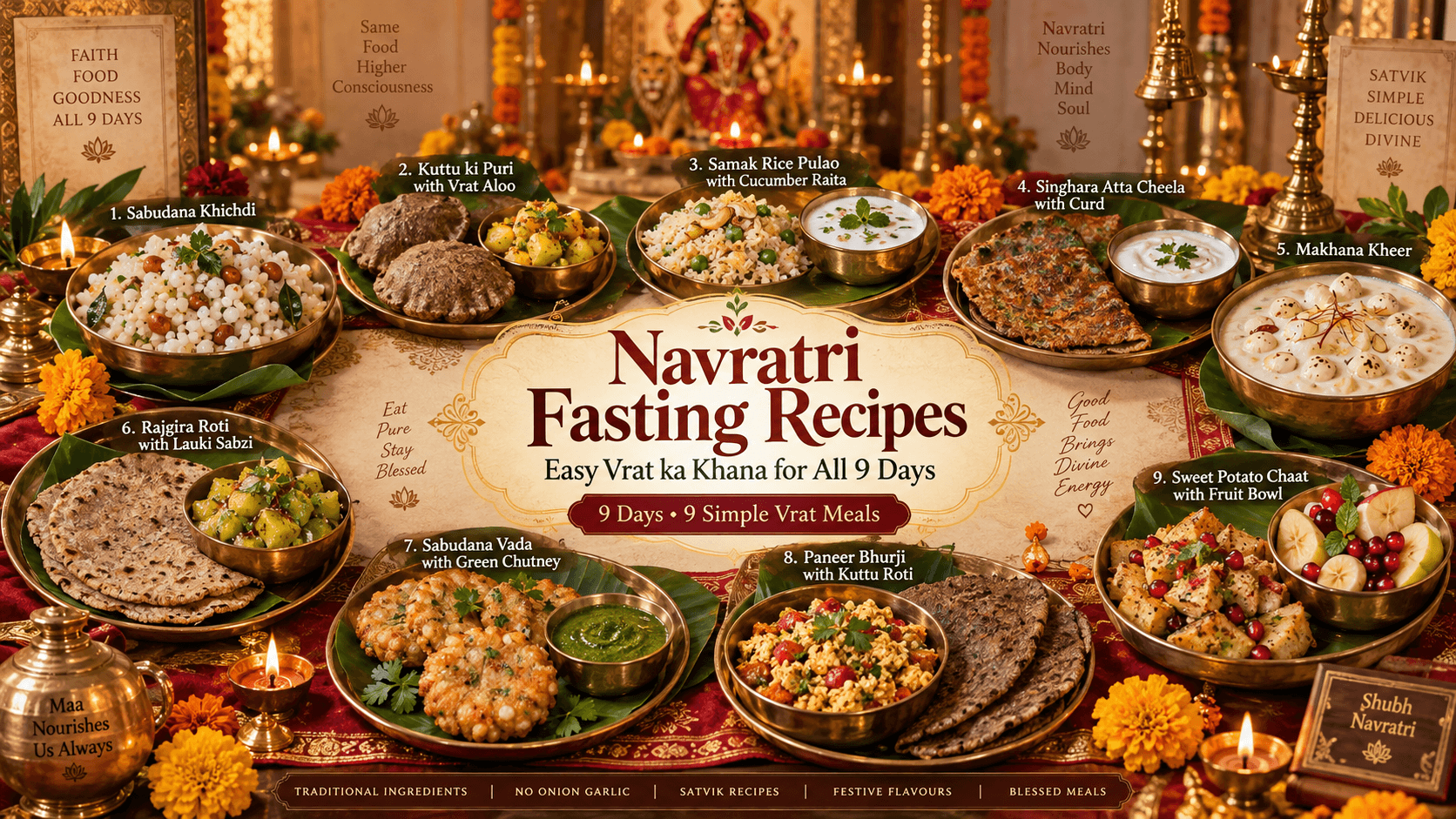
By day three of a Navratri fast, many households ask the same question: What can we cook today that isn't a variation of yesterday's meal? While vrat food is often thought of as bland, it actually allows for all sorts of dishes if one knows the right ingredients.
The vrat recipes will mostly consist of dishes made from sabudana, kuttu, singhara, rajgira flour, samak rice, potatoes, sweet potatoes, fruits, makhana, peanuts, and, according to the rules of fasting, they should be seasoned with sendha namak.
What Can You Eat During Navratri Fasting?
Most households commonly include:
Flours and grains: kuttu, singhara, rajgira, samak rice, sabudana
Vegetables: potato, sweet potato, bottle gourd (lauki), pumpkin, cucumber, raw banana
Dairy and others: milk, curd, paneer, ghee, makhana, peanuts, dry fruits, seasonal fruit
Seasoning: sendha namak, cumin, green chilli, ginger, lemon
Many people steer clear of wheat, white rice, all types of pulses and lentils, onion, garlic, regular table salt, store-bought snacks, and meat products. The rules differ according to region and family, with tomato, hing and some spices being treated differently by various families.
Your 9-Day Navratri Vrat Menu
Day 1: Sabudana Khichdi. Rinse sabudana, drain well, and rest it for several hours until each pearl squishes easily between two fingers. Temper cumin in ghee, add boiled potato cubes, green chilli, crushed roasted peanuts and sendha namak, then fold in the sabudana and cook gently for a few minutes until translucent. Finish with lemon. Soggy khichdi usually means the sabudana was over-soaked or under-drained.
Day 2: Kuttu Ki Puri with Vrat Aloo. Knead kuttu flour with boiled, mashed potato, sendha namak and a little cumin. The potato acts as a binder, since kuttu has no gluten. Roll small, fry in hot ghee or oil, and serve with potatoes tossed in ghee, cumin, ginger and green chilli.
Day 3: Samak Rice Pulao with Cucumber Raita. Rinse samak rice, sauté with cumin, green chilli, potato and peanuts, then cook covered in roughly twice its volume of water until fluffy. Serve with curd, grated cucumber and roasted cumin.
Day 4: Singhara Atta Cheela with Curd. Whisk singhara flour with water or curd, sendha namak and a pinch of cumin into a pourable batter. Cook thin pancakes on a ghee-greased pan until golden on both sides. Pair with curd or a fresh coriander-mint chutney.
Day 5: Makhana Kheer. Roast makhana in ghee until crisp, crush about half, and simmer in milk for 20–25 minutes until creamy. Sweeten with sugar or mishri and finish with cardamom. A gentle dessert that also works as a light meal.
Day 6: Rajgira Roti with Lauki Sabzi. Rajgira dough is delicate, so knead with warm water and roll gently between two sheets of butter paper. Cook on a tawa with a touch of ghee. Serve with bottle gourd cooked in ghee, cumin, ginger and sendha namak.
Day 7: Sabudana Vada with Green Chutney. Mix soaked sabudana with mashed potato, crushed peanuts, cumin, chopped green chilli and sendha namak. Shape into patties and shallow-fry or air-fry until crisp. For a lighter version, skip deep-frying.
Day 8 (Ashtami): Paneer Bhurji with Kuttu Roti. Crumble fresh paneer into ghee with cumin and green chilli, season with sendha namak, and serve with kuttu roti made the same way as the puri dough. A protein-rich meal for a long day of puja and Kanya Pujan.
Day 9 (Navami): Sweet Potato Chaat with Fruit Bowl. Boil or roast sweet potato, cube it, and toss with lemon, roasted cumin and sendha namak. Serve with banana, apple and pomegranate for a light, refreshing close to the nine days.
Small Tips That Make Vrat Cooking Easier
- Check kuttu flour freshness. Stale or poorly stored kuttu flour can upset the stomach. Buy from a trusted source, check the date, store it airtight, and cook it soon after opening.
- Balance the carbs. Sabudana and potato are carbohydrate-heavy, so pair them with curd, paneer, peanuts or makhana for more lasting energy.
- Stay hydrated. Buttermilk, coconut water, lemon water and plain water all help through long fasting days.
- Prep ahead. Soak sabudana and portion flours the evening before so busy mornings stay manageable.
Cooking Vrat Food Abroad
While families in the diaspora sometimes face challenges in obtaining ingredients, they are often able to find substitutes that are quite useful. Kuttu atta can be simply defined as buckwheat flour and can be found in any Indian grocery store or in health food shops. Sabudana, which is commonly available in Indian and Asian grocery stores, is simply tapioca pearls or sago. Samak rice can also be found under the labels sama, samvat, or barnyard millet. Rock salt, commonly found under the name sendha namak or pink rock salt, can be used but only if it doesn't contain iodine. When a particular food item is not available, get creative with a menu consisting of fruit, milk products, potatoes and sweet potatoes, nuts and makhana.
Read more https://www.hiastro.in/blog/navratri-mantras-one-powerful-mantra-for-each-of-the-nine-days
A Balanced Note on Fasting and Health
How unyielding one's dedication is not determined by their amount of food intake. Pregnant women, diabetics, patients under constant therapy, the elderly, and anyone with health classifications should consult a physician before they begin to fast, while a modified fast consisting of eating fruit and drinking milk or one simple meal is normal. Some families would practice the fast on the first and the last days of the fast or simply during Ashtami thus complying with the custom.
Choosing the Fast That Suits You
Whether an entire nine-day fast, a portion of a fast or simply observing some of the important days would be suitable largely depends on one’s health, daily routine and beliefs. People who want to make a balanced decision about fasting during Navratri can consult an astrologer at HiAstro to get a personalized approach to fasting while a doctor will be the right person to turn to for any health issues.
Frequently Asked Questions
1. What should I eat while fasting for Navratri?
You can eat fruits, milk, curd, paneer, sabudana, kuttu and rajgira flour, samak rice, potatoes, sweet potatoes, makhana, peanuts and dried fruits, all seasoned with sendha namak.
2. Is sabudana allowed during Navratri fasting?
Yes, sabudana is one of the most commonly consumed food items and is eaten in khichdi, vada and kheer.
3. Can I use normal salt while fasting for Navratri?
Most people use sendha namak instead of regular salt.
4. Can we eat tomatoes, peas or drink tea during Navratri?
It varies from family to family and region to region. Some people can drink tea or coffee with milk during Navratri, some can eat tomatoes while others cannot.
5. Is kuttu flour safe to consume?
Fresh and properly stored kuttu flour is safe. However, if it is stale, it may cause problems in the stomach; therefore, the expiry date should be checked, and it should be used shortly after being opened.
6. Is it possible for diabetics or pregnant women to observe a fast during Navratri?
Only when a doctor advises it. Modified types of fasting where people consume low GI foods like makhana, nuts, samak rice, and rajgira are observed and fasting is not a mandate.
7. What should I do if I am unable to fast for the entire nine days?
Partial fasting is quite common, and many people observe fasts just on the first and last days or only the day of Ashtami, so as long as the intention is pure, the rigidity doesn’t matter.