


HiAstro Insights
Navratri Bhog List: What to Offer Maa Durga on Each of the Nine Days
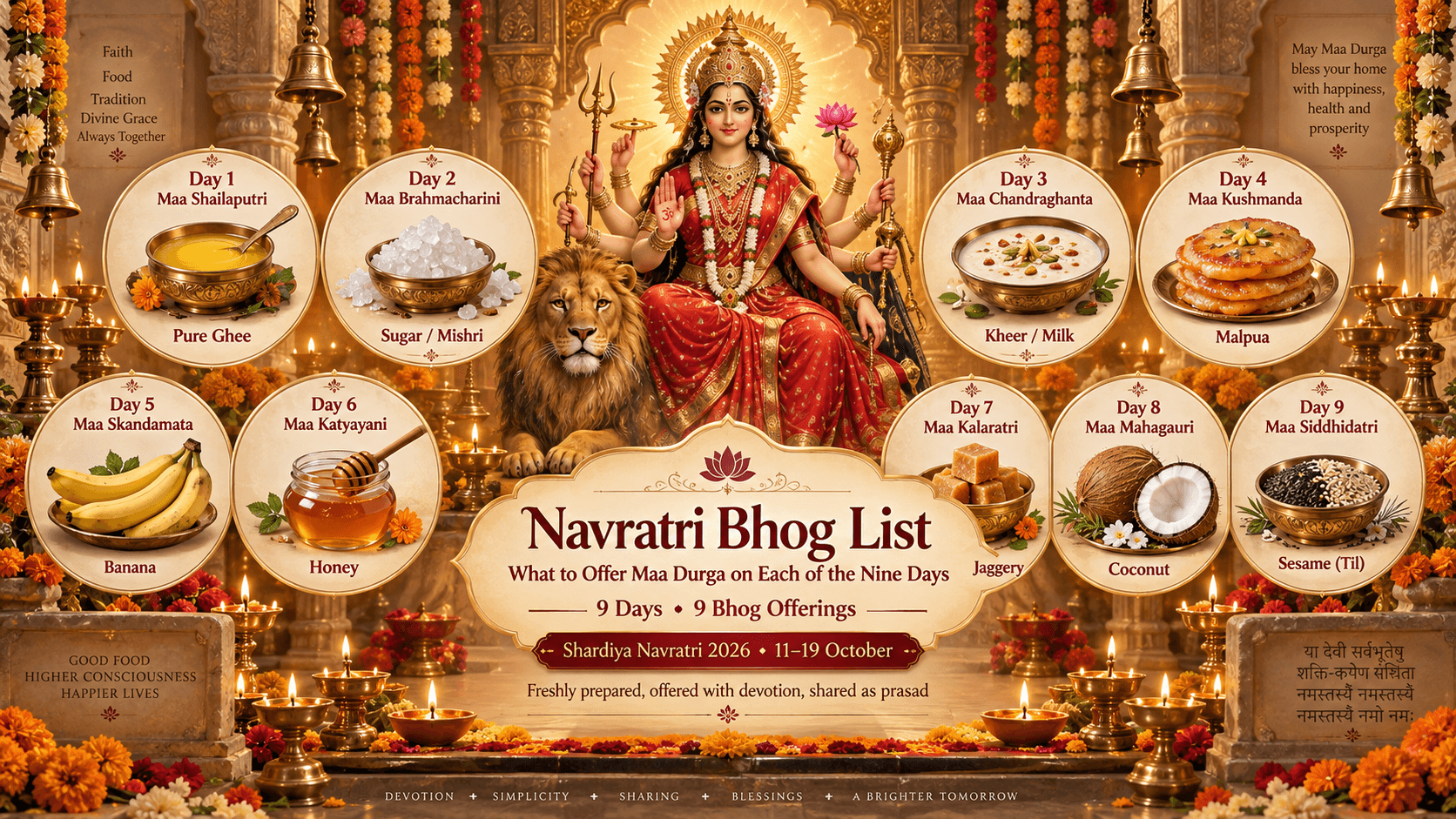
After the puja ritual is performed and the diya is lit, the next question arises in many homes and what food to prepare that day. Each night of Navratri corresponds to a different form of Goddess Durga, and each goddess that is worshipped is offered a specific kind of food that is referred to as bhog or naivedyam.
As per the most commonly followed Navratri bhog traditions, ghee, sugar, kheer, malpua, banana, honey, jaggery, coconut, and sesame have to be served each day; that is, nine offerings for nine days. The Shardiya Navratri festival will be celebrated from 11th to 19th October in the year 2026. Below is a description of what food should be served each day during the festival. All the details mentioned in this article are suitable for North Indian customs. The customs related to bhog differ in many regions and among families.
Navratri Bhog List 2026: Day by Day
Day 1 (11 October): Maa Shailaputri - Pure ghee. Cow ghee is offered on the day of Ghatasthapana, traditionally associated with health and nourishment for the family. A ghee lamp or a ghee-roasted sweet such as singhara halwa works well.
Day 2 (12 October): Maa Brahmacharini - Sugar or mishri. A plain offering for the goddess of discipline and penance, linked with longevity and a sweet, steady temperament. Mishri with a few nuts or panchamrit are common alternatives.
Day 3 (13 October): Maa Chandraghanta - Kheer or milk. Rice cooked slowly in milk with sugar and cardamom is offered for peace and relief from worries. Plain milk, makhana kheer or rabri are widely accepted substitutes.
Day 4 (14 October): Maa Kushmanda - Malpua. The sweet pancake is traditionally associated with wisdom and clear thinking. Malpua made with singhara or kuttu flour keeps it vrat-friendly.
Day 5 (15 October): Maa Skandamata - Banana. Bananas are offered for well-being and nurture. They are also the easiest bhog of the nine, needing no cooking at all.
Day 6 (16 October): Maa Katyayani - Honey. Honey is offered for sweetness in speech and relationships, which fits the day many families link with prayers for harmony and marriage.
Day 7 (17 October): Maa Kalaratri - Jaggery. Jaggery is offered to the protective, fearsome form of the goddess, traditionally associated with courage and protection from misfortune. Jaggery-based sweets such as til-gur laddoo work too.
Day 8 (Ashtami): Maa Mahagauri - Coconut. A whole coconut or coconut-based sweets are offered for the fulfilment of wishes. Many families also prepare halwa, puri and chana for Kanya Pujan on this day.
Day 9 (Navami): Maa Siddhidatri - Sesame (til). Sesame seeds or sesame sweets close the nine days, traditionally associated with blessings and protection. Because Ashtami and Navami fall very close together in 2026, check a local Panchang for exact timings.
Read more https://www.hiastro.in/blog/navratri-fasting-recipes-easy-vrat-ka-khana-for-all-9-days
How to Offer Bhog Properly
The process is simple and doesn't need a priest:
- Prepare freshly - Cook after bathing, using clean utensils and a clean kitchen. Avoid onion, garlic and stale or leftover food.
- Place it on a clean plate or leaf in front of the Goddess after the day's puja and mantra.
- Offer with intention. A short prayer or the day's mantra is enough.
- Pause briefly. Allow a few minutes after the offering.
- Share as prasad. Eat a little yourself and distribute the rest among family, neighbours and visitors.
Vrat-Friendly Bhog Ideas
Whenever fasting, devotees can always prepare offerings made of various ingredients permissible during the fasting period including ghee, sugar, milk, makhana, kuttu or singhare flour, fruits, and sendha salt instead of normal salt. The family’s bhog may include makhana kheer, singhara halwa, and jaggery laddoos. However, devotees usually prepare bhog for the entire family while tasting only a tiny portion of it.
What If Ingredients Are Hard to Find?
Indian families living in foreign countries make efforts to find ingredients such as mishri and coconut. Nevertheless, other ingredients like ghee, sugar, jaggery, honey, banana, and sesame can easily be found. In case a specific item is not available, one may use an equally good substitute such as a seasonal fruit, milk, or a simple sweet. The sincerity of one’s offering is important rather than the ingredient itself.
Regional Variations
Bhog practices vary across the nation. In Bengal, khichuri is an offering during Durga Puja bhog on the Ashtami and Navami days. However, in South India, navaratri celebrations are generally associated with the preparation of sundal, a legume dish. Some families have their own practices that have been handed down through generations, which means there is no definitive "correct" list of bhog.
A Balanced Note on Bhog
Bhog is a form of worship and not a way to show culinary skills. Offering a banana in worship is just as good as a lavish spread. Please note that if sweets are given to diabetics, the amount must be limited. Also, honey should not be given to children below one year of age. When it comes to fasting, health must be prioritized and the doctor should be consulted.
Choosing Your Offerings Wisely
Families sometimes ask whether certain bhog suit their own chart or planetary period, since each form of Durga is also linked with a planet. Generate your free Kundli to see your planetary positions, or speak with an astrologer on HiAstro for personal guidance beyond a general Navratri bhog list.
Read more https://www.hiastro.in/blog/navratri-2026-dos-and-donts-what-to-do-and-avoid-during-the-nine-days
Frequently Asked Questions
1. What is the Navratri bhog list for all nine days?
Day 1 ghee, Day 2 sugar or mishri, Day 3 kheer, Day 4 malpua, Day 5 banana, Day 6 honey, Day 7 jaggery, Day 8 coconut and Day 9 sesame seeds.
2. What bhog is offered to Maa Shailaputri on Day 1?
Pure cow ghee is offered, usually along with a ghee lamp, on the day of Ghatasthapana.
3. Is the bhog list the same in every region?
No. This is a widely followed North Indian sequence, and other regions have their own offerings, such as khichuri in Bengal and sundal in South India.
4. Can I offer fruit or milk instead of cooked bhog?
Yes. A sincere offering of fruit, milk or a simple sweet is considered perfectly acceptable if you can't cook the traditional item.
5. Can fasting devotees prepare Navratri bhog?
Yes, using vrat-friendly ingredients like ghee, milk, sugar, makhana, singhara or kuttu flour and fruit, and sendha namak instead of regular salt.
6. What should I do with the bhog after offering it?
Distribute it as prasad among family, neighbours and visitors, taking some yourself as well.
7. What if I forget or miss a day's bhog?
Nothing is undone by a missed offering. Offer it the next day or simply continue, since sincerity matters more than perfect accuracy.