


HiAstro Insights
Navratri 2026: Complete 9-Day Colour Guide with Dates and Goddess for Each Day
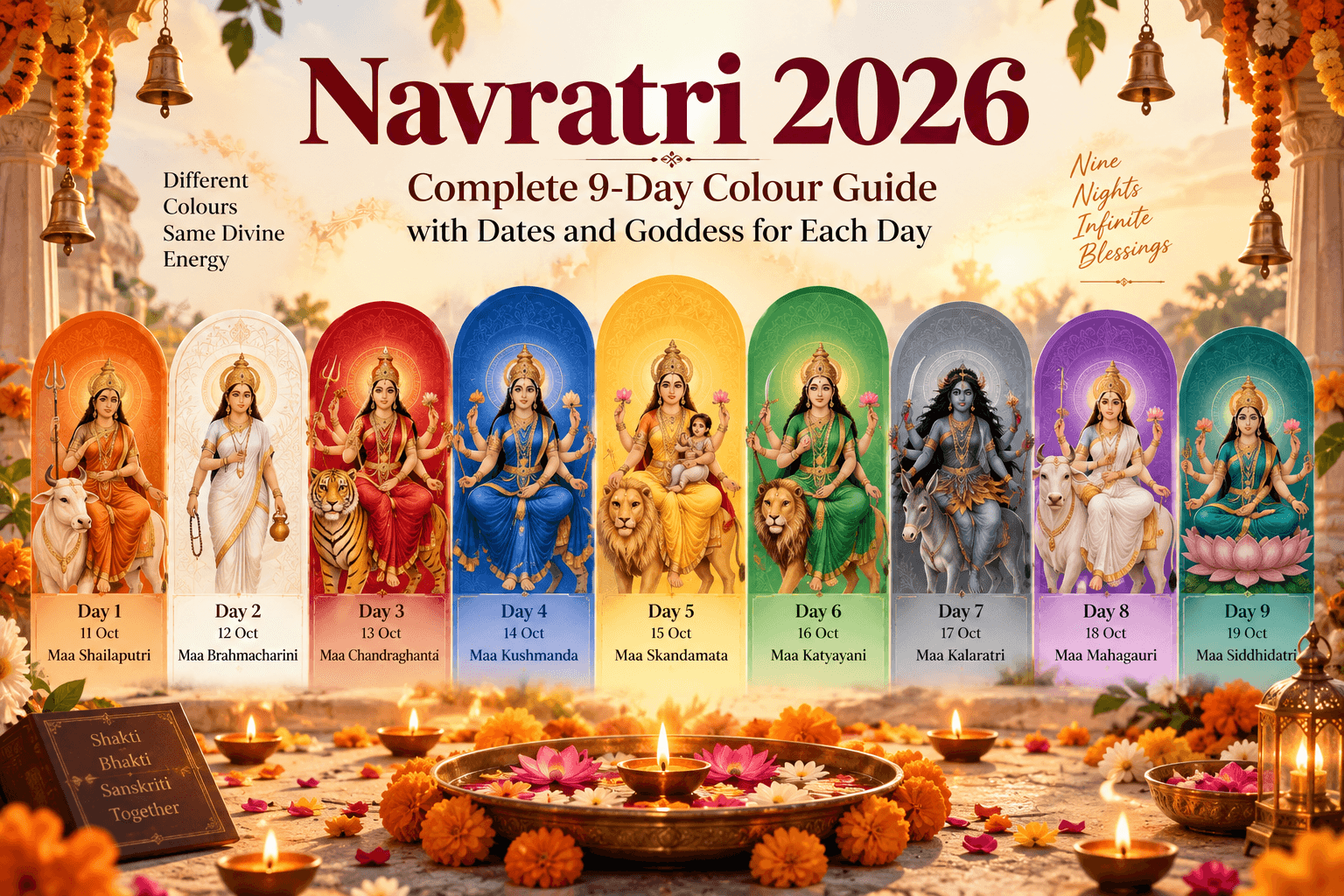
Navratri - a term that translates to 'nine nights', is one of the most anticipated festivals in the Hindu calendar. The Navadurga are the divine forms of Goddess Durga worshipped during this festival. A unique ritual that binds together families and communities through this festival is the ritual of wearing a specific colour on each of the nine days of the celebration.
The next occurrence of the Shardiya Navratri festival takes place from Sunday, 11 October to Monday, 19 October, with the Vijayadashami festival taking place on Tuesday, 20 October. Since this year, the Navratri festival starts on a Sunday, the nine days of celebrations will feature orange as the colour of the first day.
Navratri 2026 Colour Chart: Day-Wise Dates and Goddess
- Day 1 – Sunday, 11 October: Orange — Maa Shailaputri
- Day 2 – Monday, 12 October: White — Maa Brahmacharini
- Day 3 – Tuesday, 13 October: Red — Maa Chandraghanta
- Day 4 – Wednesday, 14 October: Royal Blue — Maa Kushmanda
- Day 5 – Thursday, 15 October: Yellow — Maa Skandamata
- Day 6 – Friday, 16 October: Green — Maa Katyayani
- Day 7 – Saturday, 17 October: Grey — Maa Kalaratri
- Day 8 – Sunday, 18 October: Purple — Maa Mahagauri
- Day 9 – Monday, 19 October: Peacock Green — Maa Siddhidatri
Note: The colour for each day corresponds to the ruling planet of that weekday in Vedic astrology. Since the starting weekday changes every year, this sequence is specific to 2026. Always verify the colours against the current Panchang rather than reusing a previous year's chart.
Read more https://www.hiastro.in/blog/navratri-2026-dates-colors-puja-vidhi-and-fashion-guide
Why Do Navratri Colours Change Every Year?
The consistent confusion arises from this issue. While the nine colors — orange, white, red, royal blue, yellow, green, grey, purple, and peacock green — themselves stay the same throughout the years, the sequence can vary, as the first color depends on the day of the week on which Navratri festival starts. This follows the traditional color associated with the ruling planet of each day of Navratri, that is, Surya on Sunday, Chandra on Monday, Mangal on Tuesday, etc. Given that Navratri in 2026 begins on a Sunday, the sequence will begin with orange.
What Each Colour Signifies
- Orange (Day 1): Represents energy, warmth, and new beginnings — a fitting start to the nine days.
- White (Day 2): Symbolises purity, peace, and calm devotion.
- Red (Day 3): The colour most associated with the Goddess herself, representing strength and passion.
- Royal Blue (Day 4): Reflects depth, richness, and divine power.
- Yellow (Day 5): Associated with joy, optimism, and wisdom.
- Green (Day 6): Represents growth, nature, and fresh starts.
- Grey (Day 7): Signifies balance and quiet inner strength.
- Purple (Day 8): Denotes ambition, spiritual depth, and abundance.
- Peacock Green (Day 9): A blend of individuality and compassion, closing the festival on a note of fulfilment.
The Nine Forms of Durga (Navadurga)
Each colour is worn in honour of a specific form of the Goddess:
- Shailaputri — daughter of the mountains, worshipped for stability
- Brahmacharini — the ascetic form, representing discipline and penance
- Chandraghanta — the warrior goddess bringing courage and peace
- Kushmanda — believed to be the creator of the universe
- Skandamata — worshipped as the protective mother of Kartikeya
- Katyayani — the fierce destroyer of evil, especially significant for those seeking marriage or relationship harmony
- Kalaratri — the fearsome form that dispels darkness and negativity
- Mahagauri — the serene, purifying form worshipped on Ashtami
- Siddhidatri — the giver of spiritual accomplishments, worshipped on Navami
Many households also divide the nine nights into three phases of worship: the first three days for Durga (strength), the next three for Lakshmi (prosperity), and the final three for Saraswati (wisdom) — which is why all three goddesses are often placed together at the home mandir during this period.
How to Use the Navratri Colours
Although the most widespread way of observing the observance will stem from wearing the designated colour for the day, it isn’t just limited to clothes. In fact, many families extend the significance of the day to not only puja decorations but also to mandir flowers, rangoli designs, and home lighting. None of this is obligatory as what matters here is the gesture behind the tradition more than the actual colour. In case the required colour is not available, it is assumed that red and yellow can be treated as acceptable, auspicious replacements on that day.
Astrological Significance of the Nine Days
Each day of Navratri has a color corresponding to the ruling planet of that color. The period has astrological significance as well. The nine-day period is thought to be an ideal time for starting new endeavors, spirituality, and even making important life decisions. Since the energies of the nine planets are believed to be present during the nine days of Navratri, individuals who would like to know on which day they should start their business, purchase something expensive, or practice spirituality may find it beneficial to check their Kundli or consult an astrologer beforehand.
Frequently Asked Questions
1. What are the Navratri 2026 dates?
Shardiya Navratri 2026 begins on Sunday, October 11 and continues until Monday, October 19 with Vijayadashami Day (Dussehra) falling on Tuesday, October 20.
2. What is the Day 1 colour for Navratri 2026?
Since Navratri 2026 begins on a Sunday, the colour for Day 1 is orange, which is dedicated to Maa Shailaputri.
3. Does the Navratri dress code colour change every year?
The nine colour codes are the same from year to year, however, the order is different every year as per the weekday when Navratri begins. Therefore, one must look for the colour code each year instead of following the previous year's code.
4. What is the best option if you don’t have the colour of the day?
Red or yellow are considered to be universally lucky colours, so you can wear them wherever you cannot find the specific colour.
5. Which goddess is worshipped on Ashtami and Navami during Navratri 2026?
Maa Mahagauri is worshipped on Ashtami (18 October), and Maa Siddhidatri on Navami (19 October) — both especially significant days for Kanya Pujan..
6. Is there any astrological reason for the Navratri colour sequence?
Yes. The colour associated with a particular day is derived from the planet ruling on that day as per Vedic astrology. Hence, the starting colour varies as per the day of Navratri.