


HiAstro Insights
Vedic Astrology Birth Chart Reading: How It Differs from Western Astrology
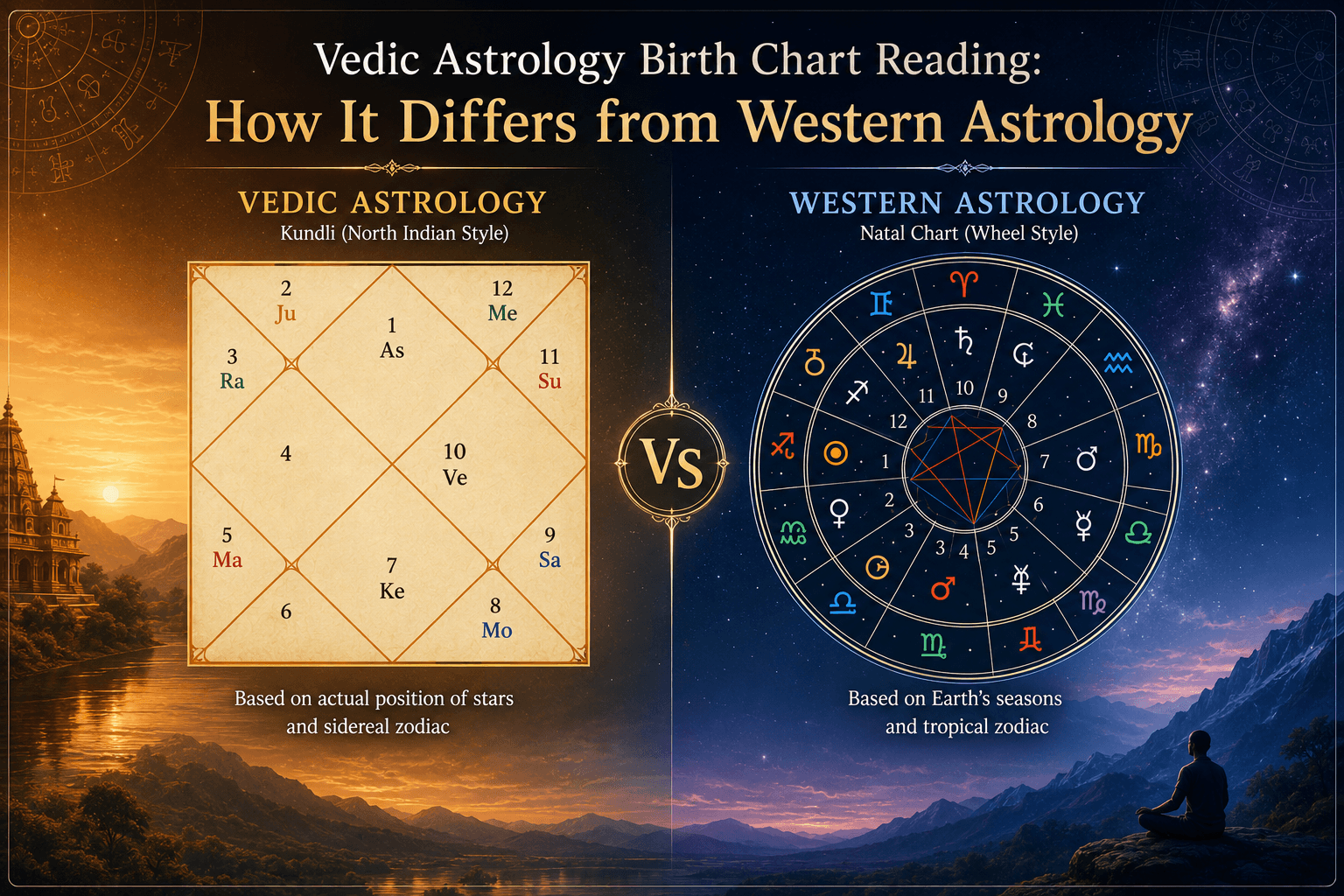
Astrology has played an important role in human decision-making for many centuries. However, different types of astrology are conducted differently. Two of the most popular forms of
astrology, Vedic and Western, can yield widely different results when applied to the same individual.
So, which type is better? More importantly, how does a Vedic astrology birth chart differ from a Western astrology birth chart?
In this guide, we discuss on the fundamental differences between Vedic and Western astrology to provide you with a fundamental understanding of both systems and describe why Vedic astrology is often thought of as being more accurate in terms of predicting the future.
What Is Vedic Astrology?
A Vedic astrology birth chart, also known as a Kundli, is a representation of the sky at the precise moment a person is born. This system of astrology utilises ancient Indian astrological methods and considers where in the sky the planets were positioned.
Compared to a regular horoscope, a Vedic birth chart is substantially more detailed and analyses:
- Where the planets are located in the 12 zodiac signs
- The 12 houses, which represent different areas of your life—e.g., career, family, finances, etc.
- The Dasha system (planetary periods for Vedic Astrology)
- Where the planets were located in the Nakshatras/lunar constellations
Vedic astrology does more than simply describe a person's characteristics; it can help predict important events in a person's life, as well as assist with timing and future outcomes.
What is Western Astrology?
Most people know about Western astrology due to their sun signs (Aries, Taurus, Gemini, etc). Western astrology utilises the tropical zodiac, which is determined by the Earth's seasons as opposed to the position of stars within the zodiac itself.
Western astrology also creates a birth chart with the planetary positions at the time of your birth, but it focuses on the following items:
- Your personality traits.
- Your psychological tendencies.
- Your emotional patterns.
It provides tremendous depth into who you are, but typically offers less insight into timing particular life events.
Vedic vs Western Astrology: The Core Difference
The primary difference between Vedic and Western astrology is how the two derive the planetary position of the planets.
For the Vedic astrologer, they interact with the sidereal zodiac, which is comprised of actual constellations in the sky, whereas the western astrologer uses the tropical zodiac, which is comprised of fixed seasonal points.
Thus, your zodiac sign may be different under Vedic astrology than it is under Western astrology, i.e., an Aries in Western astrology may actually correlate with a Pisces in Vedic astrology.
The Vedic astrologer considers the occurrence of a rotating reference frame referred to as "precession", vs the Western astrologer, who does not account for this phenomenon or make any adjustments for it.
Difference in Approach: Prediction vs Personality
The second biggest distinction is how the systems of Vedic vs Western are utilised. Vedic astrology is purely predictive and is based on both planetary periods (Dashas) and current planetary alignments/transits. The primary questions you can ask Vedic astrology may encompass:
- When will I get married?
- When will I obtain a job?
- When will money start coming in?
Whereas Western astrology is more focused on psychological aspects of being human, it gives a deeper understanding of:
- Who you are
- Your emotional patterns
- Your strengths and weaknesses
In Summary:
The Vedic System is built on predicting what will happen and when it will happen.
Western Astrology is about helping identify who you are and why you do what you do.
Importance of Timing in Vedic Astrology
One of the greatest strengths of using Vedic Astrology for analysing a person's birth chart is how it was developed to predict timing. The Dasha System, used for predicting timing, utilises the planets' movements through particular zodiac signs, providing its ability to influence many different aspects of your daily life and your experiences over time based on several factors, including the time period of particular planets transiting through certain signs. There will be specific timing events with each planet (or the absence of that planet), some of these events can include, but are not limited to:
- When Venus will impact your life's activities (and where) with love, partnership, etc.
- The period of time when Saturn exerts its influence on you (and where) regarding challenges, restrictions, or the need for discipline
- The period of time when Jupiter's influence on you (and where) provides opportunities for growth and expansion.
On the other hand, Western astrology does not have the same predictor applied to timing as Vedic astrology does. Therefore, Vedic astrology is generally regarded as superior for predicting future results.
Role of Nakshatras (Unique to Vedic Astrology)
Vedic Astrology differs from Western Astrology in that it uses 27 Nakshatra (Lunar Constellations) in addition to the 12 Zodiac signs to predict and examine a person's energy type and personality. Each Nakshatra is linked to different types of energy and personality traits. Therefore, to get a more detailed view of your energy and personality, consider two people born under the same Zodiac Sign: their Nakshatra may give you very different information about them. This is one of the reasons why people tend to see Vedic Astrology as being more specific and individual.
House System Differences
Although both Vedic and Western Astrology are divided into 12 houses, they are interpreted differently. In Vedic Astrology, you look at a person's birth chart from an event-oriented viewpoint. Each house will correspond to different themes in a person's life, such as career, marriage, health, finances, etc. The Prediction will be based on where the planetary body is placed in a given house when viewed by the house system.
In Western Astrology, you tend to view your birth chart from a psychological perspective. That is, the focus is on "how you feel internally" rather than "what is going on in the world around you".
Accuracy: Which One is More Reliable?
This is among the most frequently-asked inquiries concerning Vedic and Western astrology – with Vedic astrology typically being viewed as more precise regarding the timing of:
- When you should marry.
- When you should obtain employment.
- When you should generate wealth.
- When significant life occurrences will happen.
Vedic astrology's accuracy comes from its use of various forms of predictive analyst – which are:
(a) the actual position of the planets;
(b) the Dasha timing framework;
(c) analytical info derived from the Nakshatras.
Western astrology usually provides more accurate predictions for:
(a) self-awareness;
(b) feeling-oriented comprehension;
(c) growing personally.
Why Vedic Astrology is Gaining Popularity
The most popular reason is that a new group of individuals are looking for practical assistance using both Western & Vedic systems. They believe they receive great assistance in answering questions related to (such as): When to marry; will my ex-boyfriend or ex-girlfriend return; and when to be promoted via their Vedic astrology natal-chart reading compared to their Western astrology-based equivalent. The predictive nature of these Vedic astrology natal-chart readings provides the reasoning for the increased demand for the same.
Final Thoughts on Vedic vs Western Astrology
Western and Vedic astrology both provide valuable services, but they fulfill different needs; Western astrology will help you understand yourself, while Vedic astrology will help you find success in your life. That being said, if you want deeper insight into yourself, then use only Western astrology; however, if you are in need of precise timing of things or predictions of your future events, then use only Vedic astrology. So, choosing between the two types of astrology isn't about choosing which type is superior; it's really about choosing which type of astrology can offer you the most clarity in your life.