


HiAstro Insights
Jivitputrika Vrat: Meaning, Date, Rituals and Significance
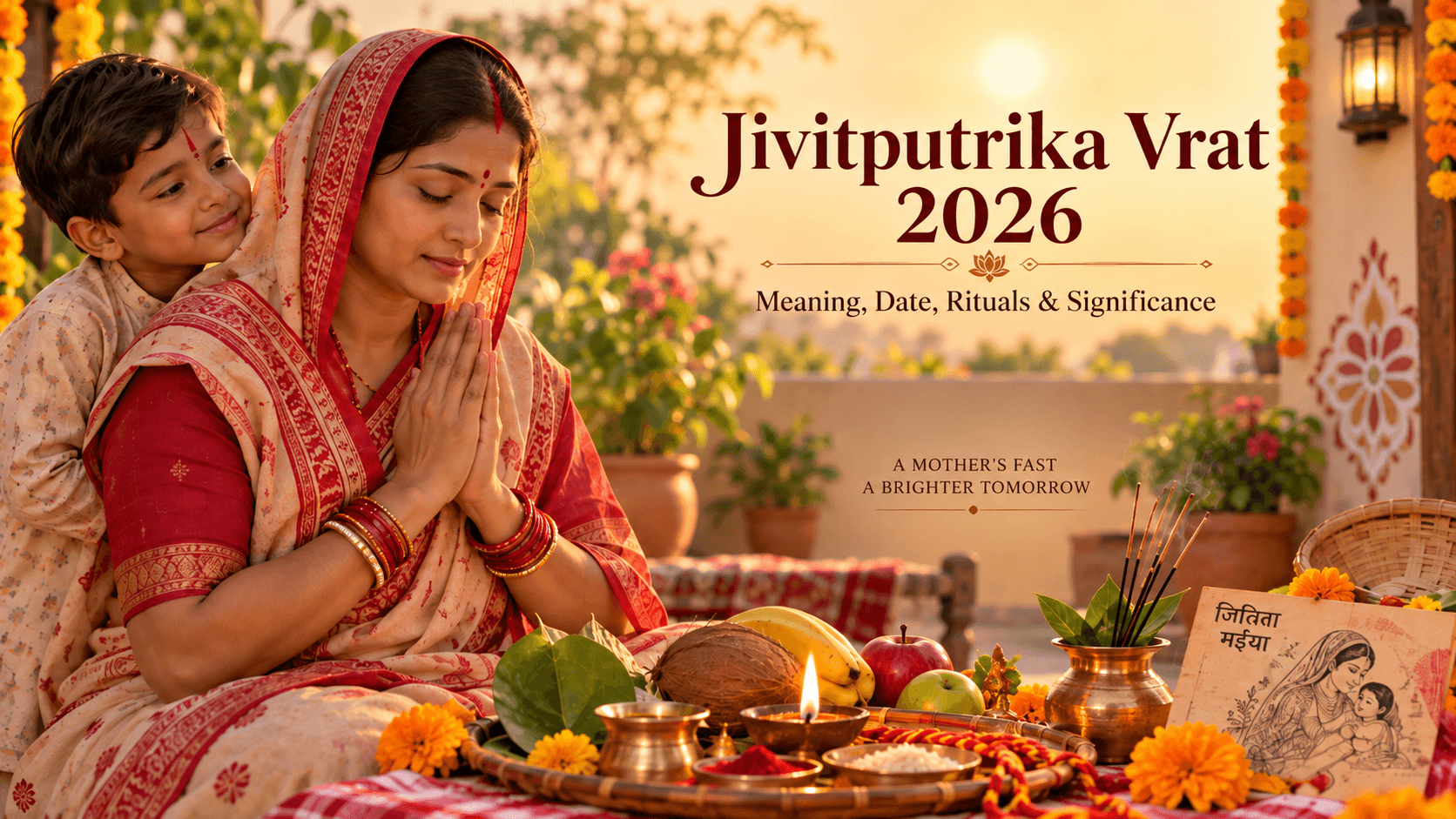
Among the many fasts observed by Hindu mothers for their children's well-being, few are as physically demanding — or as deeply devotional — as Jivitputrika Vrat, more commonly known as Jitiya or Jiutiya. Observed largely across Bihar, Jharkhand, eastern Uttar Pradesh, and the Terai region of Nepal, this vrat asks mothers to go without food and water for a full day and night, praying for their children's long life, health, and protection.
Here's a complete guide to what Jivitputrika Vrat involves, when it falls in 2026, the story behind it, and how it's traditionally observed.
What Is Jivitputrika Vrat?
The Jivitputrika Vrat — commonly known as mother's Vrat — is observed on the Dasami of Krishna Paksha in the month of Ashwin according to the Hindu calendar. The word Jivitputrika means the vrat kept for a child who is alive. Earlier, it was only celebrated for the male child. However, today the vrat is also observed for daughters, which is why many modern families perform it for the well-being of their children. In some parts of Nepal, this vrat is known as Jitiya vrat and simply Jitiya.
This vrat is celebrated in Pitru Paksha (2 weeks of the month), which is important for Hindus as well.
Read more https://www.hiastro.in/blog/shraad-tarpan-and-pind-daan-whats-the-difference-a-simple-guide
Jivitputrika Vrat 2026 Date
Jivitputrika Vrat (Jitiya) 2026 will be observed on Saturday, 3 October. The Ashtami tithi begins around 8:00 AM on 3 October and continues until approximately 5:51 AM on 4 October, though exact timings can vary slightly depending on the local Panchang and city.
Like Chhath Puja, Jitiya is not a single-day event but a three-day observance:
Nahay Khay (2 October): The preparatory day, when the fasting mother takes a ritual bath and eats one simple, sattvic meal to prepare the body for the fast ahead.
Jitiya Vrat / Nirjala Fast (3 October): The core day of the observance — a complete fast without food or even a sip of water, lasting roughly 24 hours.
Parana (4 October, morning): The fast is broken only after the Ashtami tithi has ended, typically in the early hours of the morning.
The Story Behind Jivitputrika Vrat
The vrat can be traced back to the story of King Jimutavahana, who is known for his great compassion. The Katha tells us how Jimutavahana learned that Garuda, the mighty eagle, was to take one Naga being each day in sacrifice. When the time had come for the young Naga Shankhachuda to be sacrificed, Jimutavahana chose to step forward in his place, covering himself in the same red cloth and lying down on the stone of sacrifice. He was ready to sacrifice himself without raising an objection or putting up a fight.
Garuda was extremely moved by Jimutavahana’s willingness to give his life for another being without complaining at all, and therefore chose to spare him. This beautiful tale of sacrifice for another's well-being is remembered by mothers every year during Jivitputrika Vrat, expressing their wishes for the same divine spirit to bless their sons and daughters.
Jivitputrika Vrat Puja Vidhi
While rituals vary slightly by region and family tradition, the puja generally follows this structure:
Nahay Khay preparation: A ritual bath followed by a single sattvic meal on the day before the main fast.
Morning puja on Ashtami: The fasting mother wakes early, performs a cleansing bath, and sets up a small puja space with kumkum, sandalwood, and a lit lamp.
Worship of Jimutavahana: A symbolic form representing King Jimutavahana is worshipped, often alongside offerings of betel leaves, coconut, and seasonal fruit.
Listening to the Vrat Katha: The story of Jimutavahana is narrated or read aloud, usually in a group setting with other fasting women.
Maintaining the nirjala fast: No food or water is consumed for the full duration of Ashtami.
Parana: Once the tithi ends, the fast is broken the following morning with a simple meal, only after the correct timing has been confirmed.
Fasting Rules and Precautions
The nirjala (waterless) nature of this fast makes it one of the more physically intense observances in the Hindu calendar, and it's worth approaching with care:
- Pregnant women, those who are unwell, elderly, or managing chronic health conditions are traditionally advised to either modify the fast (including water or fruits) or avoid the nirjala format entirely.
- Adequate preparation during Nahay Khay — staying well-hydrated and eating a nourishing meal the day before — makes a meaningful difference to how the body copes with the fast.
- The fast should always be broken gradually, starting with light, easily digestible food rather than a heavy meal immediately after Parana.
Regional Variations
The core concept of the vrat is consistent, although its manner of observance differs from region to region. In states like Bihar and Jharkhand, the observance follows the set pattern of Chhath Puja, as this festival too is marked by various gatherings in which people participate in the katha recitation of the festival. In several areas of Nepal's Terai, the festival is known simply as Jitiya, which is one of the major festivals celebrated by married women. There may also be folk songs and folk tales that are associated with this festival, in addition to the specific Jimutavahana story.
Why This Vrat Carries Extra Weight During Pitru Paksha?
As Jivitputrika Vrat coincides with Pitru Paksha, many families feel that it is natural to honour ancestors and pray for their children at the same time, thus continuing the ancestral tradition. The astrological perspective rests upon the belief that the health, longevity, and wealth of a child are all determined by his/her parents’ respective 5th house and Jupiter, which represents children. For mothers who wish to know what their particular chart says about their children’s health, education, and life, a Kundli analysis is much more informative than just being given general advice.
Check your free Kundli or consult an astrologer to understand what your chart says about your children's well-being this Pitru Paksha and Jivitputrika Vrat season.
Frequently Asked Questions
1. When is the Jivitputrika Vrat taking place in 2026?
The Jivitputrika Vrat (Jitiya) will be celebrated on 3 October, which is a Saturday, and on 2 October, Nahay Khay will be celebrated while Parana is being observed during the early hours of 4 October.
2. Are Jivitputrika Vrat and Jitiya the same festivals?
Yes, Jivitputrika Vrat is known as Jitiya as well as Jiutiya in a larger context as it is well known in Bihar, Jharkhand and National Capital Region..
3. Is this fast observed without water?
Yes, this is mainly a nirjala or a waterless festival lasting approximately 24 hours and therefore can be said to be one of the most difficult vrats in the Hindu calendar.
4. Who celebrates Jivitputrika Vrat?
Jivitputrika Vrat is mainly celebrated by mothers who pray for their children with regards to their longevity, health and safety of their offspring.
5. What is the history of Jivitputrika Vrat?
This vrat has been inspired by the myth of King Jimutavahana who gave his life for a young Naga so that he would be saved from Garuda, which describes the concept of selflessness in protecting others which the mothers pray for.
6. Is it ok for sick or pregnant women to fast without water?
Pregnant or sick women, as well as senior citizens, are advised to alter the fast in such a way that they consume water or fruits.
7. Why does Jivitputrika Vrat coincide with Pitru Paksha?
The celebration of Jivitputrika Vrat and Pitru Paksha occurs in the Ashvin month of the Hindu calendar, and many believe that these two customs are complementary as honoring the ancestors is done while praying for the descendants.