


HiAstro Insights
Why Do We Feed Crows During Pitru Paksha? The Real Meaning Behind the Ritual
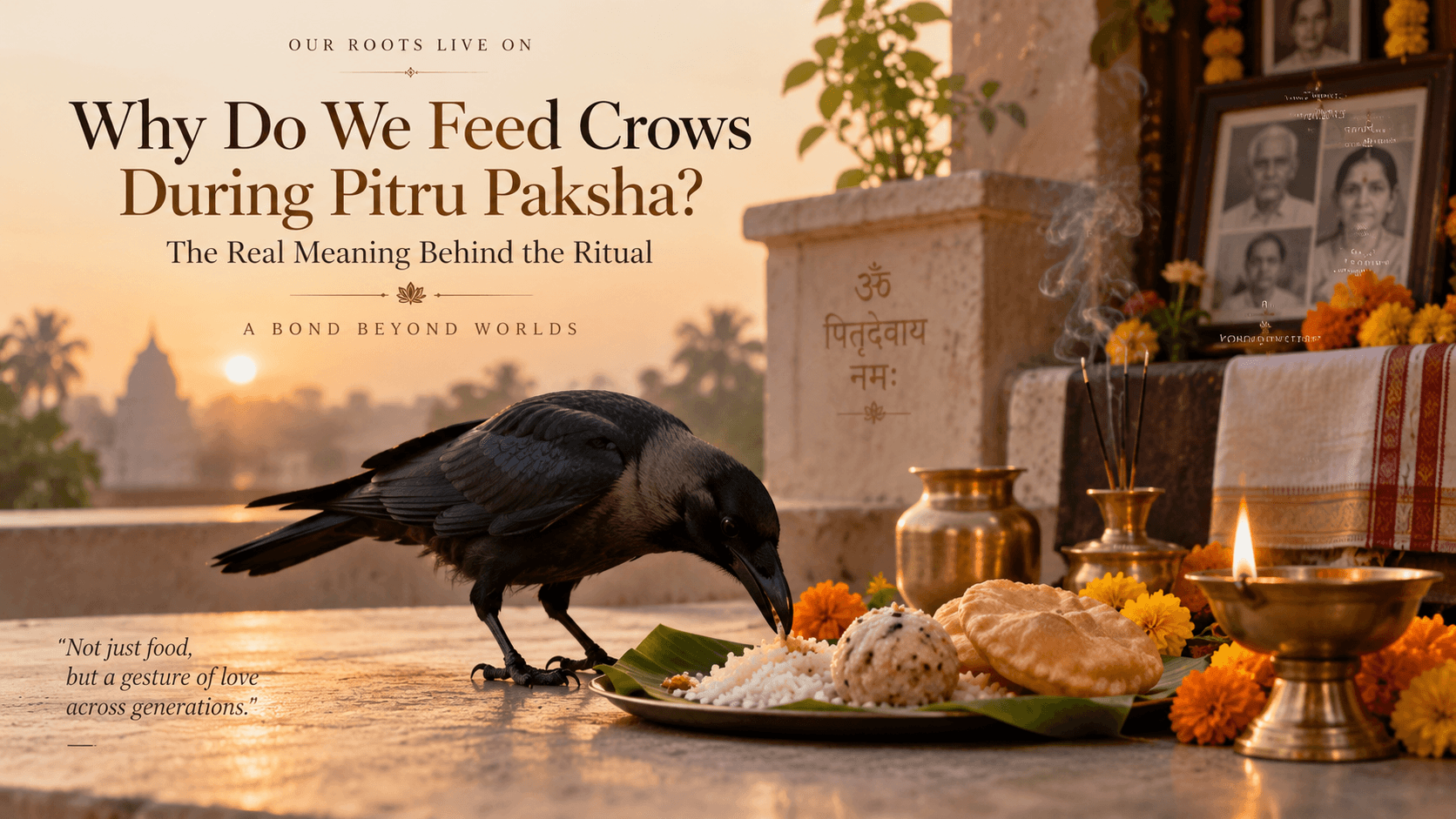
If you observed Pitru Paksha when you were a child, you surely have your own memory of something like a little plate of rice, puri, or Pind put on the terrace or balcony, with the whole family waiting in silence, each of them hoping that crows would come and eat the food. When the crow actually arrives, the feeling is positively calming, while failing to see the expected bird can be extremely worrying. Observing the feeding of crows is probably one of the most awaited rituals during Pitru Paksha, yet it hasn’t been given enough explanation as to why people carry out this practice.
Pitru Paksha 2026 is taking place between September 26 and October 10, and it would be interesting to find out where this custom originates from as well as why it is still so significant for people who don’t follow other religious practices on this day.
Crows as Messengers of Yama
The idea that influenced this tradition was the importance of Yamaraja, the god of death and justice in Hindu mythology. According to beliefs, crows serve as messengers of Yamaraja and act as a connection between the living and Pitru-Loka, which is said to be the home of the souls of ancestors. This means that when crows eat the food offered during Shraddha, they are not just eating on behalf of the ancestors.
This is why many families take note of the moment a crow eats the food. It is not just some kind of superstition, but direct confirmation of the fact that the ritual is completed.
Read more https://www.hiastro.in/blog/pitru-rin-the-ancestral-debt-every-horoscope-carries
The Connection to Ancestral Souls
Not only do crows serve as messengers, according to certain beliefs, but they are also understood by some cultures to be an embodiment of Pitrs (souls of ancestors), especially in this special lunar fortnight that occurs each year. However, not only is this belief associated with Pitru Paksha – it has also been attested in broader Hindu and Nepali traditions. In Nepal, for instance, the festival of Kaag Tihar (the Festival of Crows), which is celebrated during Tihar, is entirely devoted to worshipping crows because crows are believed to appease Yama’s messengers and, thus, protect from all misfortunes and grief caused during upcoming years.
Why Crows Specifically, and Not Other Birds?
This question is a good one, and its answer includes aspects of both behavior and symbolism. Crows are intelligent social creatures known for their complex thinking process, memories and tendency to caw when something out of the ordinary happens around them, which might be one of the reasons we associate them with omens and messages in the traditions that are based on observation. Their black color also has signified mystery and an unknown aspect of a boundary between life and death for numerous nations and tribes.
Additionally, Pitru Paksha is not limited to crows only. One can also see cows and dogs being fed during this celebration — cows being regarded as sacred ones in Indian traditions and dogs linked with Yama's messengers. Thus, the feeding of the three groups of animals is a way to respect all creatures related to the ancestral hell.
What If the Crow Doesn't Eat the Offering?
It is one of the most common causes of jitteriness around Shraddha, and it deserves a calmer response than the one it usually receives. In case a crow does not arrive on the food promptly, most priests and traditional advice encourage devotees simply to wait on it, visit a different location, or keep the food on offer again later in the day. Contrary to popular belief, it is not viewed as an indication of bad luck or ruined offerings because crows are wild creatures relying on several considerations that have nothing to do with doing the ceremony properly. What matters in this case is the meaning of the sacrifice; it does not matter that the crow took a long time to come or did not come at all.
What Does Science Say About This?
Additionally, the functional and biological aspects of this custom must be acknowledged. Crows are highly opportunistic feeders endowed with excellent memory and keen olfactory sense, which makes them inclined to find food on balconies or terraces: especially, they are greatly attracted to food such as rice and grains that are more often served during Shraddha ceremonies. From the ecological perspective, crows also function as scavengers, helping eliminate food wastage both in cities and rural areas. While these facts do not dismiss the spiritual meaning of the ritual, they stress the value of the tradition and how an ancient custom fitted the traits of the behavior of animals into rituals dedicated to remembrance and honoring the past.
How to Perform This Ritual Respectfully
The practice itself is simple and doesn't require elaborate preparation:
- Offer a small portion of the Shraddha meal — rice, puri, or a bit of pind — on a clean plate or leaf
- Place it in an open, quiet area like a terrace, balcony, or garden, away from household disturbance
- Offer it preferably in the morning, before the family's own meal
- Approach the act with patience rather than urgency, since crows may take some time to appear
Some families extend this gesture slightly further by also placing food for stray dogs and cows on the same day, keeping with the broader spirit of the ritual.
A Tradition That Goes Beyond Ritual Mechanics
The fact that remembrance is regarded as not only a feeling but as an undertaking is one of the main principles behind most of the practices of Pitru Paksha. The idea of remembrance goes beyond human beings and includes even the smallest creatures that receive the blessings of that belief. People may either follow it based on their beliefs or apply some logic of crow behaviour, but nevertheless, the practice is still a relevant activity among Hindus during this time.
For those curious about whether specific ancestral rituals, including this one, are especially significant for their own family's chart — particularly where Pitru Dosha may be present — a personalised Kundli reading offers more direction than general tradition alone. Check your free Kundli or speak with an astrologer this Pitru Paksha.
Read more https://www.hiastro.in/blog/is-fasting-required-during-pitru-paksha-rules-for-food-diet-and-vrat
Frequently Asked Questions
1. Why are crows viewed as Yama's messengers?
In Hindu mythology, the bird is linked to the deity Yamaraja, as it is believed that crows carry souls and messages from the living people to the world of ancestors.
2. What is the significance of a crow eating the food during Shraddha?
This particular occurrence is usually thought to be an indication that the ancestors have accepted the offering provided to them through the crow.
3. What should I do if the crow does not eat the offering?
According to the traditions, the recommended course of action is to wait for a while or attempt to make another offering later instead of viewing it negatively. The value of the offering, however, far outweighs the necessity for crows to eat it straight away.
4. Is it necessary to feed the crows during Pitru Paksha?
Although it is not a must for every household, the tradition is still observed and considered to be an important ritual.
5. Do cows and dogs get fed during Pitru Paksha for the same reason?
Yes, cows and dogs are fed during this time for the particular reasons that these animals are regarded as being related to ancestor spirits, just like crows.
6. Is there a scientific reason why crows come during the ritual?
Crows are birds that are clever and opportunistic eaters and have very good noses, making them attracted to food in open spaces, regardless of the rites involved.
7. What is Kaag Tihar and how is it related to this idea?
Kaag Tihar is a festival in Nepal that is focused on worshipping crows as messengers of Yama.