


HiAstro Insights
Ganesh Chaturthi: Rituals and Puja, Prasad & Visarjan
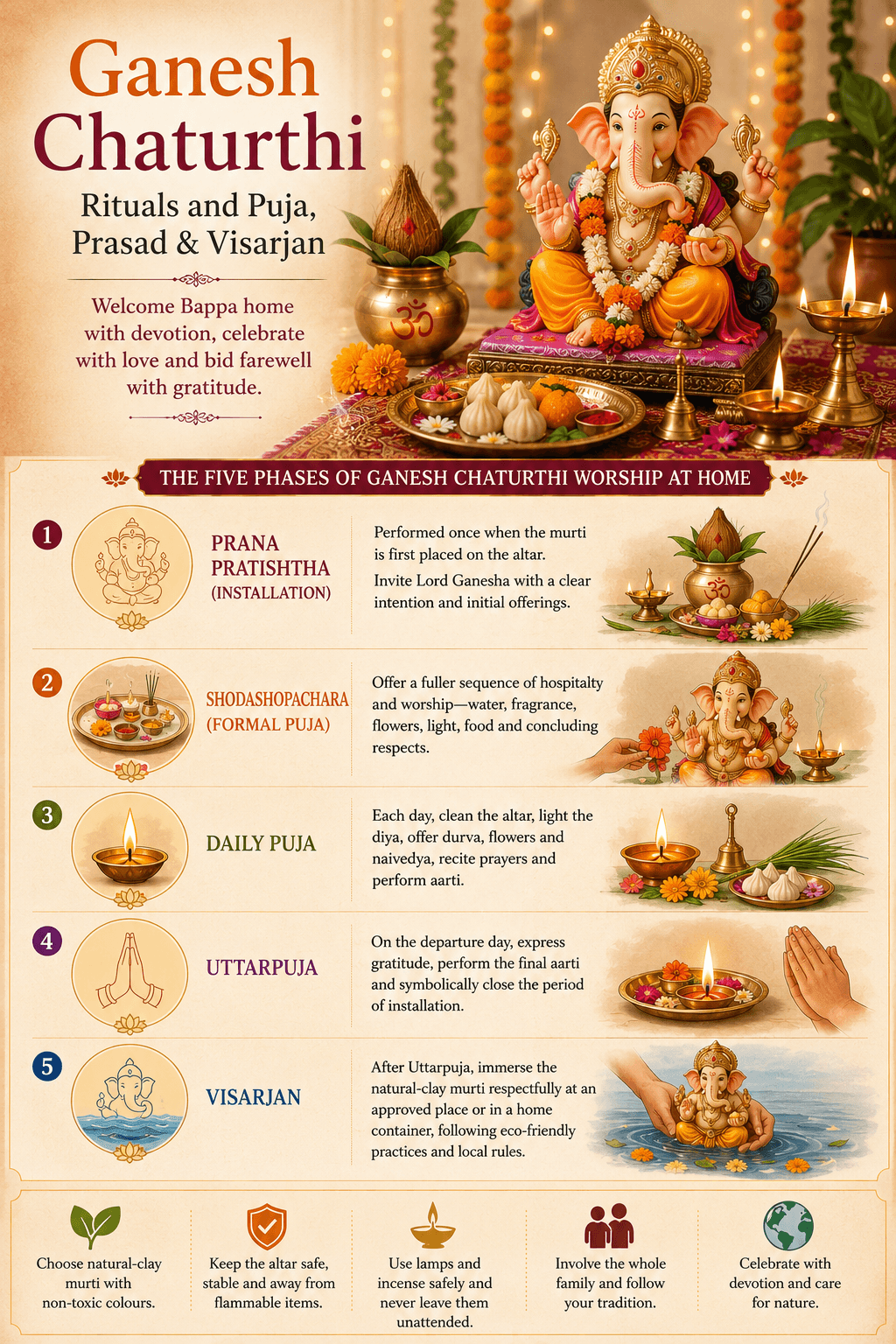
Bringing Ganpati home involves making a number of decisions. You should select a murti that suits the available space in the house, determine how long it will be installed, prepare the puja area, decide on daily pooja and plan for the immersion after the festival is over. Making these decisions in advance makes the occasion less stressful, especially if the house is small and the space is limited due to the presence of children, elderly members and guests.
Start with what you are already doing. The installation periods vary from 1.5, 3, 5, 7 or 10 days, depending on the culture of the family and the region. A short installation does not mean that it is insincere and a lengthy installation does not mean the rituals performed every day have to be complex..
Make up your mind whether the installation is to be undertaken by the family without any assistance, performed under the supervision of an elder, or carried out by a priest. Certain families perform simple home puja by themselves, while others utilize the priest's services to carry out the formal Prana Pratishtha and Shodashopachara rituals. Collect all the necessary items and arrange for immersion locally before bringing the deity home.
Choosing a Natural-Clay Murti and Preparing the Home Altar
Choose an unbaked natural-clay murti with natural or non-toxic colours, ideally from a maker who can clearly identify the materials. Avoid Plaster of Paris, plastic components, thermocol and toxic chemical paints. A small murti that can be carried safely and immersed through an authorised method is usually more practical for a household than a large, heavily decorated idol.
Set the murti on a level, load-bearing table or platform that will not wobble when someone performs aarti or reaches forward with an offering. Use a clean cloth and, if needed, a broad tray beneath the murti. Keep the altar away from the edge of furniture, busy walkways, curtains, open windows, pets and overhead objects. Leave enough room for worship without blocking a doorway or emergency exit.
Basic samagri may include:
Clean water, a spoon and a small vessel for offerings and sipping water.
Akshata or unbroken rice for respectful sprinkling during mantras.
Sandal paste or other substances used in your tradition, applied only where the murti material and paint allow.
Durva grass and fresh flowers for daily offering.
Incense, a lamp, cotton wicks, and oil or ghee for lighting.
Fruit, sweets, naivedya and an aarti plate for food offerings and final worship.
Optional items such as a bell, kalash, sacred thread or fresh cloth, added according to family custom and with care on a painted or delicate murti.
Decorate with fresh or reusable fabric, leaves, flowers, paper and other biodegradable materials. Secure electric lights without piercing cables or overloading sockets. Place oil lamps and incense on heat-resistant holders, well away from cloth, paper flowers and loose garlands, and never leave a flame unattended.
The Five Phases of Ganesh Chaturthi Worship at home
Understanding home worship can be made easier by recognizing the five associated phases involved therein. The aspect of installation or invocation (Prana Pratishtha) allows the coming of Ganesha into the murti. This phase occurs on the immediate occasion of the installation. The concept of Shodashopachara is the actual worship during the sixteenth offering made to the deity.
Once the installation is made, the household observes a daily routine of getting the place ready for worship, lighting the lamp, offering durva and flowers, offering food, chanting prayers, and performing aarti. On the designated day of departure, Uttarpuja is carried out, where thanks are offered formally, and permission is sought to depart. The final act is called Visarjan, which is essentially the immersion of the clay murti.
These phases have different purposes. Installation welcomes the deity; formal worship honours the divine guest; daily puja sustains devotion; Uttarpuja marks closure; and Visarjan completes the physical farewell. A priest may lead the formal rites, but many households use a simpler sequence under the guidance of family tradition.
Prana Pratishtha (Installation): Performed once when the Ganesh murti is first placed on the altar. The main purpose is to invite Lord Ganesha into the murti with a clear intention and initial offerings. This step is not repeated every day. A priest may lead a formal ceremony, while a householder or family elder can perform a simpler invocation at home.
Shodashopachara (Formal Puja): Performed after installation, particularly on the main festival day or other special days during Ganpati's stay at home. It involves a fuller sequence of hospitality and worship, including offerings of water, fragrance, flowers, light and food, followed by concluding respects. It may be priest-led in traditional households, although many families follow a simplified version themselves.
Daily Puja: Performed each day during the installation period, usually in the morning or evening. The family cleans the altar, lights the diya, offers durva, flowers and simple naivedya, recites prayers and performs aarti. Householders and other family members can participate, including children where appropriate.
Uttarpuja: Performed on the family's chosen departure day, before the murti is moved for Visarjan. It is the concluding worship in which devotees express gratitude, perform the final aarti and symbolically close the period of installation. A householder or priest may lead the ritual while the whole family participates.
Visarjan: Performed after Uttarpuja at a designated immersion site or in an approved container at home. The natural-clay Ganesh murti is respectfully immersed, while flowers, offerings and other materials are handled in an eco-conscious manner according to local rules. The family or householder usually performs Visarjan while following municipal or community arrangements.
Prana Pratishtha: the One-Time Installation
Prana Pratishtha means inviting the divine presence into the installed murti. In a formal ceremony, a priest may use prescribed mantras, nyasa and other ritual actions. At home, some families follow a shorter customary invocation led by an elder or householder. If your tradition treats formal consecration in a specific way, follow the priest or elder who knows that practice.
A simple household flow begins by bathing and wearing clean clothes, preparing the altar and taking a quiet sankalpa, or statement of intention. The family respectfully brings the murti to the altar, settles it securely and invokes Ganesha through the customary mantra or a sincere spoken prayer. Water, akshata, durva and flowers may then be offered before the main puja continues.
If you do not know the full Sanskrit recitation, avoid rushing through unfamiliar words merely to complete a script. You may chant a familiar Ganesha name or mantra, such as "Om Gan Ganapataye Namah," and offer a prayer in the language your family understands. The formal details vary, but the installation should remain attentive and unhurried.
Once the murti has been installed, care for the altar as a sacred space throughout the chosen period. Daily worship continues, but Prana Pratishtha itself is not performed again each morning or evening.
Shodashopachara: a Fuller Home Puja Sequence
Shodashopachara means worship through sixteen forms of hospitality. Traditional sequences may include meditation on the deity, invitation, offering a seat, water for the feet and hands, water for sipping, ceremonial bathing, clothing, sacred thread, fragrance, flowers, incense, lamp, food, betel or another concluding offering, and final reverence. Some traditions group, replace or count these actions differently.
Broad stages of a Shodashopachara-style home puja:
Invitation and Seat: Focus your mind on Lord Ganesha and ask him to come and take his position at the altar.
Water for Feet, Hands and Drinking: Pour some spoonfuls of water with care. In your home, do not pour water straight on to the murti.
Ceremonial Bathing and Dressing: Provide a symbolic bath and clean cloth or sacred thread according to your custom and the murti's material.
Fragrance and Flowers: Make sure to put sandalwood paste where necessary. Offer akshata and fresh flowers.
Incense and Lamp: Offer fragrance and light as a symbol of honor. Be sure that the fire is not too close to the murti.
Food and Final Regards: Offer naivedya and water, followed by the rest of the offerings and circumambulation according to your family customs.
An adaptable home puja can follow a simple sequence based on these forms of hospitality:
Prepare yourself and the altar
Bathe or wash your hands and feet, wear clean clothes and tidy the altar with a fresh cloth, water and samagri before starting.
Take a sankalpa and invoke Ganesha
Quietly state your intention, then invite Ganesha with the customary mantra or a sincere prayer, offering a symbolic seat and small spoonfuls of water.
Offer symbolic bathing and clothing
Where your murti is painted or fragile, offer the bathing water symbolically instead of pouring it, and offer cloth or sacred thread only if this suits your family custom and the idol’s material.
Offer fragrance, akshata, durva and flowers
Apply sandal paste where appropriate, place akshata on or near the murti, and offer durva grass and fresh flowers with attention rather than haste.
Offer incense and the lamp safely
Light incense and show the lamp before the murti, keeping both a safe distance from fabrics, paper and other flammable decorations.
Place naivedya and water
Set the food and drinking water before Ganesha, then recite a known mantra, a list of Ganesha’s names or a simple prayer in your own language.
Conclude with aarti and namaskar
Perform aarti, circumambulate the altar if space permits, bow with folded hands, and gently ask forgiveness for any mistakes in the worship.
The value of the sequence lies in attentive hospitality, not in forcing every household into one script. Families may adapt physical offerings to space, availability and established custom. If a priestly or family method differs from this outline, that tradition should guide the ceremony.
Also read https://www.hiastro.in/blog/ganesh-chaturthi-2026-sthapana-muhurat-and-visarjan-dates
A Simple Daily Puja for Short or Long Installations
Daily worship does not need to reproduce the full installation ceremony; a short, steady routine works well for most homes.
A simple daily puja during the festival can follow this manageable pattern:
Freshen the altar area
Clean the altar, refresh the drinking water and remove wilted flowers or old food so the space feels respectful and tidy.
Light the lamp safely
Refill oil or ghee if required, place the lamp on a stable, heat-resistant surface away from cloth and decorations, and then light it.
Invoke Ganesha
Stand or sit with attention, repeat a familiar Ganesha name or mantra, and bow mentally before beginning the offerings.
Offer durva, flowers and food
Place fresh durva grass and flowers, and offer fruit or a small portion of the household meal as naivedya in front of the murti.
Pray and perform aarti
Spend a few quiet moments in prayer or chant a familiar aarti, then complete the puja with namaskar before the altar.
For a one-and-a-half-day or three-day installation, the initial puja and farewell may be the fuller observances, with one or two short daily services between them. During five, seven or ten-day installations, keep the basic morning or evening routine sustainable. Your family might reserve longer recitations, bhajans or a fuller naivedya for selected days rather than trying to produce a feast at every puja.
Durva grass and flowers are customary offerings to Ganesha, but their number, variety and arrangement differ. Use clean, fresh offerings that are acceptable in your family tradition. Replace them before they decay, and keep organic discards separate from plastic wrappers, foil and other non-biodegradable waste.
If work, school or illness disrupts the planned schedule, perform a shorter puja with care instead of leaving a burning lamp unattended or hurrying through a complicated rite. Consistency, cleanliness and sincerity matter more than the length of the recitation.
Naivedya, Prasad and Regional Festival Foods
Naivedya is food set aside and offered to the deity before anyone tastes it. After the offering is completed, that food is received and shared as prasad. Prepare and handle it with clean hands and utensils, keep a separate serving portion for the altar, and avoid tasting from that portion before it is offered.
Modak is closely associated with Ganesha. Maharashtra's Ukadiche modak has a steamed rice-flour covering and a filling commonly made with coconut and jaggery. Other households prepare fried modak, laddus, fruit, savoury foods or regional forms of steamed rice dumplings. The menu and quantity depend on family custom and capacity. If your family follows a count such as twenty-one, treat it as that tradition rather than a universal requirement.
Consider the ingredients before serving children, elders and guests. Coconut, dairy, nuts, sesame, wheat and other allergens may appear in sweets or savouries, while shared equipment can create cross-contact. Tell guests what a dish contains rather than assuming that a traditional sweet is suitable for everyone.
Keep cooked food covered and use clean serving utensils. Coconut fillings, milk sweets and other perishable foods should not remain warm for long periods; refrigerate leftovers promptly when the dish permits and follow reliable storage guidance for the ingredients used. Discard food that smells unusual, shows spoilage or has been repeatedly handled.
Uttarpuja: Preparing for a Peaceful Farewell
Uttarpuja is the concluding worship performed before the murti is moved for Visarjan. It is distinct from immersion itself. The family offers gratitude for Ganesha’s presence, completes the final aarti and respectfully acknowledges that the period of installation is ending.
Begin with a clean altar and a simple final puja. Offer flowers, durva and naivedya, recite familiar prayers, and thank Ganesha for visiting the home. Ask forgiveness for mistakes or omissions. Following family custom, conclude the installed form of worship and gently prepare the murti to be moved without pulling it by ornaments or fragile parts.
Give children a clear role, such as placing a flower, singing the aarti or helping gather biodegradable offerings. Explain that Visarjan represents a loving return rather than the disposal of an object. Elders who cannot travel can participate in the final prayer at home, while another responsible group manages the immersion.
Eco-conscious and Safe Visarjan
Responsible Visarjan begins with the murti and decorations chosen before the festival. CPCB-aligned guidance favours natural, biodegradable clay and discourages Plaster of Paris, toxic paints, plastic and thermocol.
Before leaving home or arranging immersion, keep these eco-conscious points in mind:
Remove cloth, garlands, electrical lights, plastic ornaments and other decorations from the murti and altar so only the clay idol and biodegradable offerings go for immersion.
Separate flowers and other biodegradable material from recyclables and general waste, and follow local collection rules for each type of waste.
Prefer a designated municipal or community immersion tank, and follow its rules on timing, queues, murti size and acceptable materials.
Do not enter a deep river, rough sea, restricted lake or any unauthorised water body for immersion, even if it seems convenient.
In apartments, gated communities or diaspora settings, use only approved artificial tanks or collection services. A small natural-clay murti may be immersed in a household container only where local rules allow and where the resulting water and settled clay can be handled as instructed by the municipality.
Keep the route and immersion party manageable. Children should remain with a designated adult, and no one should climb onto unstable vehicles or crowded barriers. Wear footwear with grip near wet surfaces, keep a safe distance from the water’s edge and obey staff or emergency personnel. Never wade in while carrying a murti, and do not combine immersion with risky swimming or boating.
Switch off and unplug decorative lights before moving the altar or murti. Keep extension boards dry, replace damaged cables and avoid handling plugs with wet hands. Extinguish lamps and incense before departure, carry the murti with enough adults for its weight, and use a clear, well-lit path rather than moving through a crowded room with open flames.
Plan Visarjan from the day you choose the murti
Choosing a smaller natural-clay murti with natural colours and decorating with flowers, leaves, cloth and paper instead of plastic or thermocol makes it easier to follow eco guidelines and manage waste responsibly at Visarjan.
Using a Panchang to plan Ganesh Chaturthi timings
A city-specific panchang can help you check the local tithi and customary windows for sthapana, puja and Visarjan. HiAstro Panchang is one planning option, though family practice and guidance from a local priest may still affect the timing you follow. Check the panchang for your city after deciding the practical installation length, and confirm any uncertainty with the priest or elder guiding your puja.
Keep the observance flexible and rooted in tradition
Ganesh Chaturthi practices are not identical across India or the diaspora. Mantras, offerings, the order of formal worship, installation length and farewell customs may change by region, sampradaya, priestly guidance and family history. Treat a household outline as a practical framework rather than a claim that one method is universally correct.
Prepare what you can manage, maintain a clean and safe altar, and give the farewell as much thought as the welcome. Sincere worship, responsible materials and respect for local civic rules are more valuable than attempting an elaborate ritual that your space or schedule cannot support.
Frequently Asked Questions
Do we need a priest to perform Ganesh Chaturthi puja at home?
A priest is not universally required. Many families perform a simple household puja using prayers and practices they already know, while others invite a priest for formal Prana Pratishtha or Shodashopachara worship. Choose the approach that matches your family tradition and comfort with the rites.
What if we cannot maintain a long installation?
Choose a shorter period that you can observe responsibly, such as one and a half or three days where that is customary. Arrange the departure and authorised immersion option in advance. The daily puja can remain simple, but installation, ongoing care, Uttarpuja and Visarjan should still be treated as distinct stages.
How can a diaspora family arrange Visarjan where public immersion is restricted?
Ask the local temple, cultural association or civic authority whether it provides an approved artificial tank or collection service. If local rules allow home immersion, use only a small natural-clay murti and a suitable container, then follow local instructions for the water and clay. Do not use a lake, beach, river or drain without explicit permission.
What should we do with leftover prasad?
Share manageable portions and store suitable leftovers promptly in clean, covered containers. Check the ingredients and the length of time the food has remained at room temperature, especially for coconut or dairy preparations. Food showing signs of spoilage should not be eaten or distributed.
What if we miss a daily puja or do not know the mantras?
Resume with a clean altar, a simple offering and a sincere prayer. A familiar Ganesha mantra, aarti or prayer in your own language is preferable to unsafe haste or anxious recitation. Follow any specific corrective practice only if it comes from the priest or elder who guides your family tradition.
Is offering 21 modaks compulsory?
No. Twenty-one may be meaningful in some family or regional traditions, but it is not a universal requirement. Follow the custom your household or priest observes and offer a clean, manageable quantity within your capacity. Safe preparation and respectful sharing matter more than forcing a fixed count.
Coordinate Sthapana, Daily Puja and Visarjan with HiAstro
Ganesh Chaturthi practice can span one or several days, so local Tithi information helps a household separate installation, daily worship, Uttarpuja and Visarjan instead of treating them as one repeated ritual. HiAstro's city Panchang offers a practical place to recheck the displayed local calendar while you use this guide for puja, prasad, safety and eco-conscious immersion planning.
HiAstro is an AI-led astrology platform operated by Arcenia Tech Private Limited and also offers live consultation options when personal or family context matters. It is available on the web, Android and iOS/iPadOS for Hindi, Hinglish and English users. Its guidance is informational and spiritual support; follow municipal immersion rules and the family, regional, temple or priestly tradition relevant to your celebration.
Confirm the local Panchang before scheduling installation or farewell rituals. Check Local Festival Timings