


HiAstro Insights
What to Cook on Shraad Day: Traditional Food Rules and a Simple Shraad Bhoj Menu
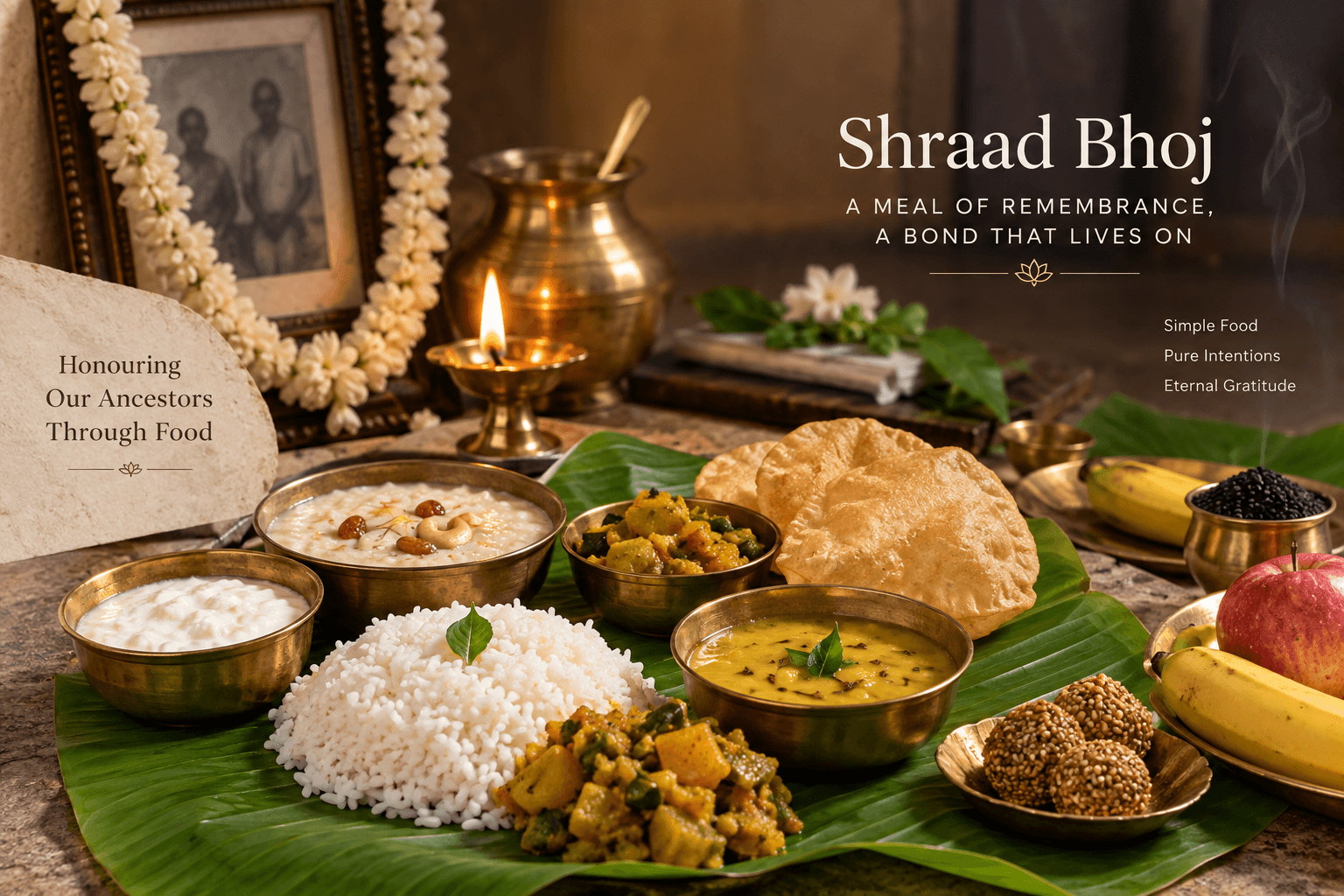
Of all the queries about Pitru Paksha, the culinary aspect probably causes the most last-minute ambiguity. Every family has a slightly varied version of the rule; while one elder of the house enforces no use of onion or garlic at all during the two weeks, another opts for this restriction only on the actual Shraddha day. In the meantime, someone is busy checking whether rajma falls within the allowable range of food items. Food remains at the core of the Shraad, whereby the whole ritual revolves around feeding ancestors through offerings, which is why the culinary details become more critical than in most other observances.
Here’s a quick rundown of what to prepare on Shraad, what to avoid, and a straightforward menu that's easy to implement for this occasion.
Why Food Matters So Much in Shraad
In contrast to many Hindu rites that have largely focused on shruti and other symbolic artifacts, Shraad is fundamentally a feast. A carefully prepared meal is first served to the ancestor through the rituals of Pind Daan and Tarpan, then to the priest, and only then does the family partake of it. The Matsya Purana tells us that the food that ancestors appreciate most consists of vegetarian dishes made from milk, curd, sugar, and ghee. Therefore, Shraad meals tend to be richer and more intentional while remaining strictly vegetarian.
Read more https://www.hiastro.in/blog/7-common-mistakes-people-make-during-pitru-paksha
What to Avoid on Shraad Day
Before getting to the menu, it helps to know what stays out of the kitchen entirely on this day:
- Non-vegetarian food, eggs, and alcohol — considered non-negotiable across virtually every regional tradition
- Onion and garlic — avoided as part of the sattvic (pure, non-stimulating) approach to the meal
- Certain lentils — masoor dal, chana dal, kali urad, and rajma are commonly excluded in many households, though this varies by region and family custom
- Brinjal (eggplant) — avoided in several traditions, though not universally
- Stale, reheated, or outside/restaurant food — the meal is expected to be freshly prepared at home, not ordered in
- Iodised or impure salt in ritual offerings — many families use rock salt (sendha namak) specifically for the ritual portion of the meal
What You Can Cook: Traditional Shraad Food
Even after mentioning these restrictions, the list of allowed items remains quite long. Rice, wheat, most kinds of vegetables (pumpkin, bottle gourd, potato, spinach, and seasonal greens), moong dal, cow milk, ghee, curd, jaggery, fruits, and most kinds of root vegetables can be included in one’s ingredients. Instead of being restrictive for the sake of the ritual, it promotes the ideas of simplicity and purity. The meal should be more flavourful than anything else.
Besides, many families observe a tradition of preparing the dish that was loved by the deceased ancestor alongside the standard Shraad meal because they believe that doing so makes the offering even more personal and meaningful.
A Simple Shraad Bhoj Menu
For a household looking for a straightforward, traditionally appropriate menu without unnecessary complexity, this covers the essentials:
Main offerings:
Steamed rice
Puri (deep-fried, made without onion or garlic)
Dal (moong or toor, tempered simply with cumin and ghee, no onion-garlic)
A seasonal vegetable sabzi (pumpkin, bottle gourd, or potato-based)
Accompaniments:
Fresh curd
Kheer (rice pudding made with milk, rice, and jaggery or sugar — considered one of the most auspicious offerings)
Seasonal fruits (banana is especially common)
Sweet offering:
Til (sesame) or besan ladoo, particularly meaningful given the role of black sesame seeds in Tarpan
This entire menu can realistically be prepared in a single home kitchen within a few hours, which is part of why it remains the standard across most households rather than something more elaborate.
How the Food Is Offered
The order in which the meal is served is as important as the ingredients of the meal. Initially, the family observes a special ritual called Pind Daan and offers a small amount of food to the ancestors. In this stage, the food is usually served on a banana leaf or on Kusha grass. The second stage involves offering food to the Brahmin priest. The next step consists of giving a small portion intended for a cow, a dog, and a crow because the rituals need the participation of these symbolic recipients to ensure contact with the ancestors through a food offering. Once all these offerings are completed, the family can finally enjoy the meal.
Read more https://www.hiastro.in/blog/shraad-tarpan-and-pind-daan-whats-the-difference-a-simple-guide
Regional Variations Worth Knowing
While the basic tenets remain the same, the details change from region to region. Puris and kheer along with a basic sabzi are commonly found in many North Indian kitchens. In states like Bihar and eastern Uttar Pradesh, local dishes like sattu parathas or thekua become part of the array of dishes prepared, thereby reflecting the tradition of Bhojpuri cuisine. In South Indian households, payasam replaces kheer with rice dishes, all in accordance with the local tradition. There is no designation of one version being better than the other — it can be observed that despite the differences, each identifies and follows the common principle.
A Few Practical Tips for Shraad Day Cooking
Cook only that much food for the day because any leftover food from Shraad cannot be used again. The kitchen area should be kept clean and food must be prepared without any distractions. Since the intention behind the cooking is considered important. The food should be cooked with heartfelt intention as this is considered very important in this process. If the family cooks just once on Shraad day, then preparing the food from this list of items guarantees that nothing important is left out.
When Rituals Raise Bigger Questions
When it comes to respecting food rules during the occasion of Pitru Paksha, everything is straightforward as long as one knows what to expect. However, the same cannot be said about determining whether ancestral rites for a family are being performed correctly or if the Pitru Dosha is causing issues in other aspects of one’s life. For this reason, check your free Kundli or consult an astrologer to obtain guidance that is specific to your family in the course of this Pitru Paksha festival.
Read more https://www.hiastro.in/blog/pitru-rin-the-ancestral-debt-every-horoscope-carries
Frequently Asked Questions
1. Is it permissible to have onion and garlic on the occasion of Shraad?
While most traditions would strictly avoid having onion and garlic on Shraad day in accordance with the sattvic diet, there are certain families that carry out this practice for the whole of Pitru Paksha period.
2. Which is the most significant dish that is to be made for Shraad?
Kheer is held to be the most holy and most widely popular offering along with some simple dal, rice and puri.
3. Is it alright to order food on the day of Shraad?
No, as per traditional principles Shraad day celebrates the use of homemade food and never any food from any restaurant or the food pre-prepared in advance.
4. Is non-vegetarian food allowed anywhere in Pitru Paksha?
No non-veg food, eggs and alcohol have to be excluded from Shraddh ceremonies including Pitru Paksha.
5. What is the significance of feeding a crow and a cow during Shraadh?
Both are regarded to be messengers of the ancestors, and that is why they should be offered the same food that is being offered to the ancestors.
6. Is table salt acceptable in the Shraadh meal?
While many people practice using rock salt (sendha namak) for this part of the meal, there are families that do not adhere to this practice.
7. Is the Shraadh menu region specific?
Yes, it is because although the sattvic vegetarian diet remains unchanged, the food items in different regions differ. For example, while payasam is common in the South, kheer and puri are common in the North.