


HiAstro Insights
Is Fasting Required During Pitru Paksha? Rules for Food, Diet, and Vrat
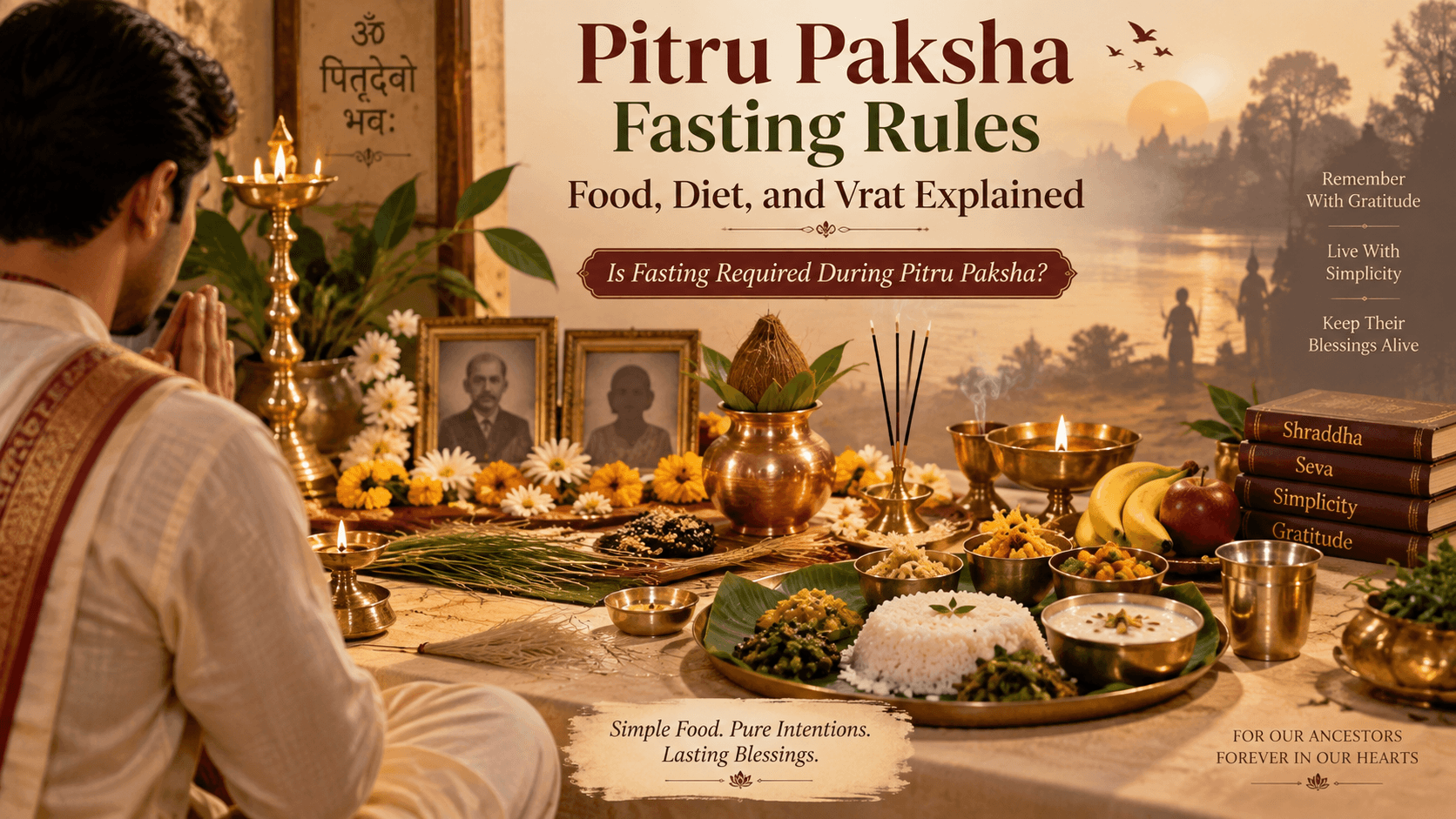
Every year, as Pitru Paksha approaches, many families get unnecessarily anxious about whether they are "doing it right," and fasting usually takes centre stage in this worry. Should everyone in the family fast? Is it only the eldest son who needs to fast? Will not fasting at all render the rituals meaningless? These are valid questions, and the good news is that there is more leeway than people expect.
This year, Pitru Paksha 2026 will be observed from September 26 to October 10. Hence, here is an overview of what fasting means and what does not involve fasting during this time.
Is Fasting Compulsory During Pitru Paksha?
No, there is no single rule requiring everyone in the household to fast during Pitru Paksha. This is one of the most common misconceptions regarding this two-week duration. In traditional texts, two different practices are clearly distinguished: one is following a strict vegetarian diet, which is widely practised, and the other is fasting, which is a more limited option and is usually not required in many cases.
To think about the entire period as one of fasting means to misinterpret the tradition, which can result in unnecessary suffering of family members trying to observe it.
Read more https://www.hiastro.in/blog/shraad-tarpan-and-pind-daan-whats-the-difference-a-simple-guide
Who Is Traditionally Expected to Fast?
The responsibility for fasting, where it applies at all, generally falls on the karta — the person performing the Shraddha ritual for a specific ancestor, usually the eldest son or closest living relative. Even then, this typically means:
- A simplified fast involving a single sattvic meal on the specific Shraddha day, rather than complete abstinence from food
- Fasting only on the day the ritual is actually being performed for that ancestor, not across the entire fortnight
- Avoiding food until the Tarpan or Pind Daan has been completed that day, as a mark of discipline before the offering
Other family members are generally expected to follow the household's dietary restrictions (avoiding non-vegetarian food, onion, and garlic) but are not automatically required to fast unless they choose to participate more fully out of personal devotion.
What About Sarva Pitru Amavasya?
The last day of Pitru Paksha, known as Sarva Pitru Amavasya, is observed more stringently than the other twelve days of the undertaking, as it signifies the end of the entire Shraadhha process and acts as the occasion to pay tribute to all of the ancestors, even those whose date of death is obscure. It is also customary for people to fast on this day, even if they did not fast during the preceding days of Pitru Paksha. However, fasting is still an issue of personal choice in this context — some people remain completely fasting for 24 hours, some limit themselves to one meal and others are perfectly fine with sticking to a sattvic diet.
The Difference Between a Sattvic Diet and a Full Vrat
Many people misunderstand the difference between these two terms, so it’s better to explain them in clear terms.
A sattvic diet requires one to consume vegetarian food that is freshly made and simple with the exceptions of onion, garlic, meat, or any other alcoholic drink. This form of diet is undertaken during the Pitru Paksha by a lot of people and involves no missed meals.
However, a complete fast means the person should not eat any food for a period of time. This is a much more specific and strict term that usually applies only to karta on the day of Shraddha and sometimes also to people on the day of Sarva Pitru Amavasya. Although both concepts are often referred to as "Pitru Paksha rules," the difference is quite distinct.
Read more https://www.hiastro.in/blog/pitru-rin-the-ancestral-debt-every-horoscope-carries
A Note on Jivitputrika Vrat and Other Specific Fasts
It's important to note that some authentic strict fasts do take place in that same time frame of the Pitru Paksha period, but they constitute their own individual practices and not blanket requirements for the occasion. An example is Jivitputrika Vrat (Jitiya), which is a difficult nirjala (waterless) fast, and it is performed only by mothers for their children's health and prosperity on its own designated date.
Who Is Exempt From Fasting?
Vedic tradition has always made room for practical exceptions, and most priests are quick to confirm this when asked directly:
- Pregnant women are traditionally exempt from fasting and strict dietary restrictions where health requires it
- The elderly, especially those managing chronic conditions, are not expected to undertake a full fast
- Children are generally not required to fast at all
- Anyone recovering from illness or on prescribed medication should prioritise medical advice over ritual fasting
Religious observance, across almost every traditional interpretation, is not meant to come at the cost of genuine health needs. A sincerely performed sattvic meal is considered entirely sufficient when fasting isn't appropriate for someone's circumstances.
Can We Drink Tea or Coffee During Pitru Paksha?
This topic arises frequently, which is why it is necessary to talk about it directly: tea and coffee are not usually part of the food restrictions during Shraddha. If someone is performing some specific fast on the Shraddha day, he or she must adhere to the terms of the particular fast, which could either allow the use of tea or not. Thus, tea and coffee are subject to personal preferences or family customs with no strict Pitru Paksha limitations.
Why This Confusion Persists
A significant amount of confusion about fasting occurs due to the misconception of Pitru Paksha as a uniform observance, while, in fact, it consists of a broad-ranging dietary observance, which many people observe, a precise ritual fast, which is followed by karta on a specific date, and completely different vrats such as Jivitputrika practiced by specific people for specific purposes — all of them happening during the same general period.
For those families that do not quite understand which fasts apply to their spiritual life, a personalized reading is more helpful than general advice. Use your free Kundli or consult with your astrologer if you want to learn more about fasting during Pitru Paksha.
Frequently Asked Questions
1. Must everyone in the family fast during Pitru Paksha?
No, it is only the karta who may have to go fasting on certain days; other family members will usually have their dietary restrictions but not fast completely.
2. Is fasting necessary on Sarva Pitru Amavasya?
Although fasting is not obligatory on this day, many people observe a fast on this day as it is the last day of Shraddha.
3. How is the diet during Pitru Paksha different from fasting?
The meaning of a sattvic diet is eating vegetarian food in a simple way, whereas fasting means refraining from eating anything (or drinking, depending on how strict the fast is) for some time.
4. Are pregnant women under pressure to fast during Pitru Paksha?
No, pregnant women may be exempted from fasting and strict diets, provided their health allows them to do so.
5. Is Jivitputrika Vrat included in the general rules regarding fasting during Pitru Paksha?
No, it’s a different and special kind of fast which mothers perform praying for their children while the timing of this fast is in accordance with Pitru Paksha.
6. Are children or elderly people allowed to fast during this period?
It’s believed that children and elderly people should not fast according to the traditional recommendations since health should come first before observing the fast.
7. If a person breaks his fast does he need to perform the Shraddha rite?
It should be noted that the fast doesn’t need to be observed along with Shraddha and as long as the person did the necessary rituals he/she is free to skip the fasting.